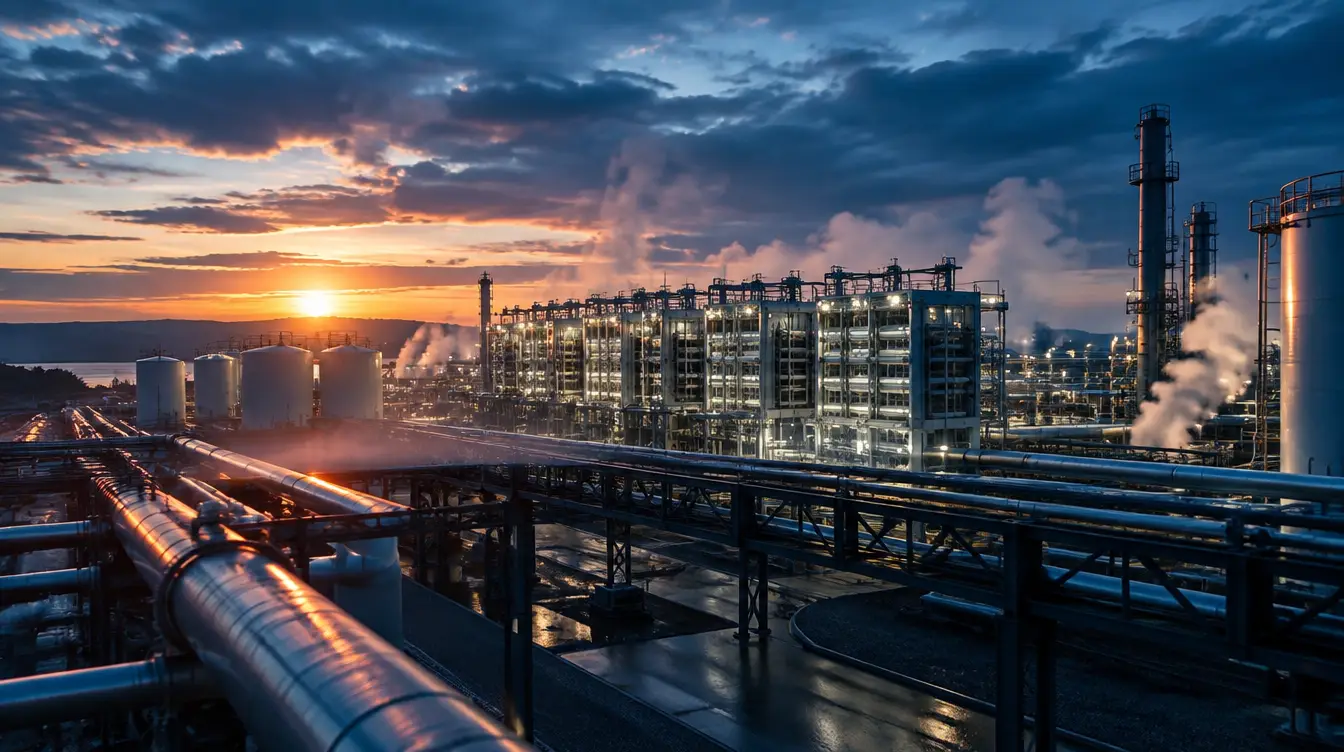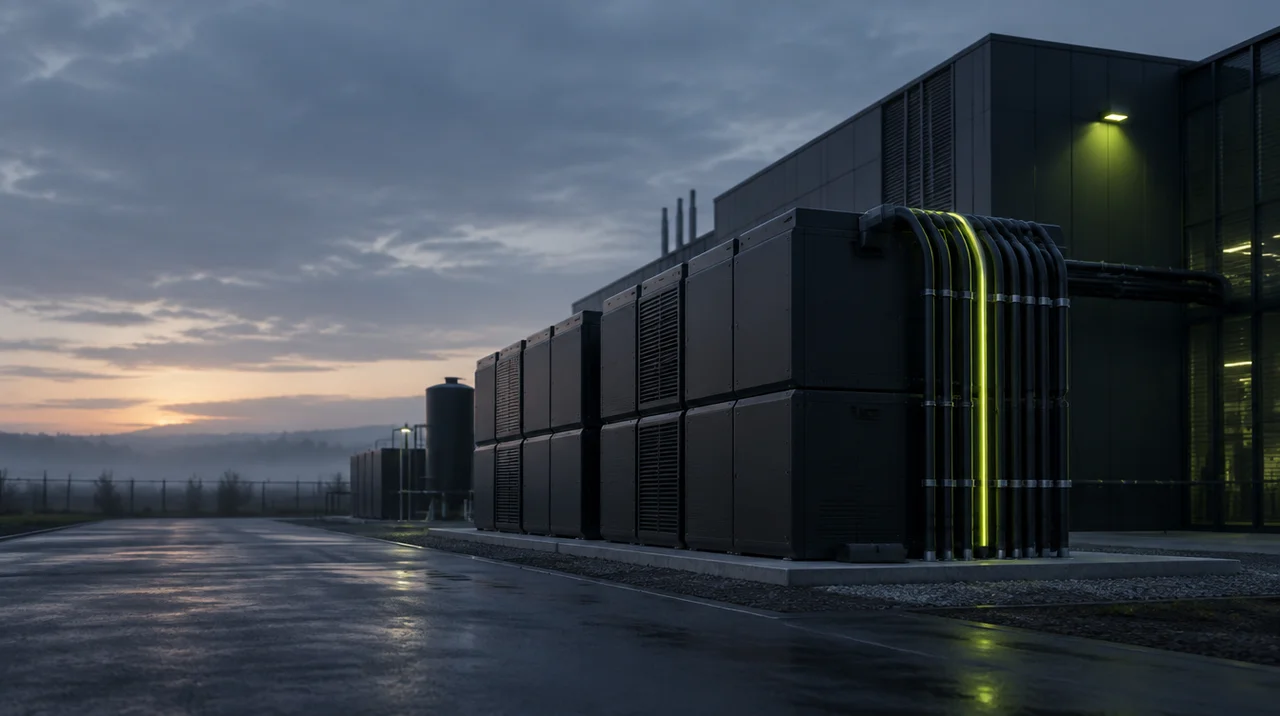
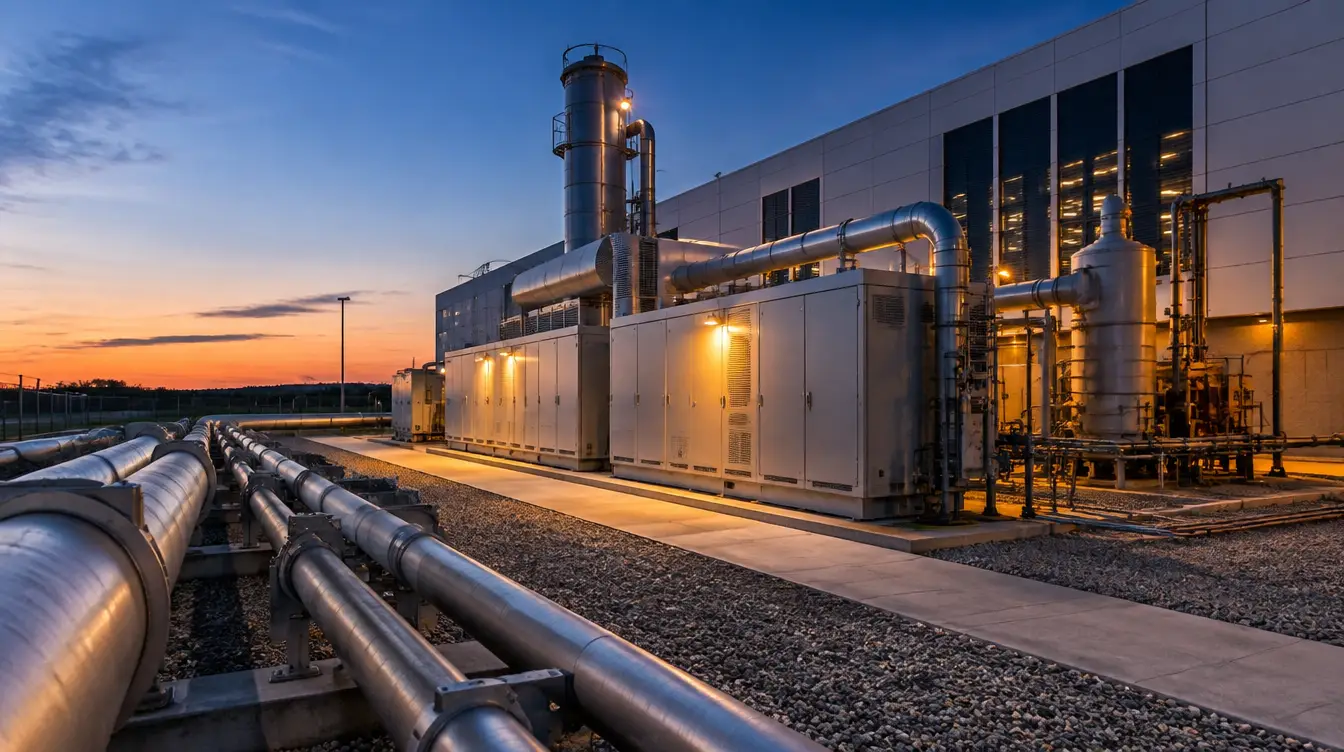
Natural gas fuel cells power data centers without combustion or a grid connection. Here's the actual electrochemistry, and why it beats a backup generator.
Author -
Paulestini Francois
Published -
Natural gas fuel cells generate electricity through a chemical reaction, not combustion which is the single fact that explains almost everything else about why data centers are installing them. No burning means no flame, no exhaust in the traditional sense, and a very different noise, emissions, and permitting profile than the generator most data center operators are used to. Here's what's actually happening inside one, and why that mechanism matters for facility running AI workloads.
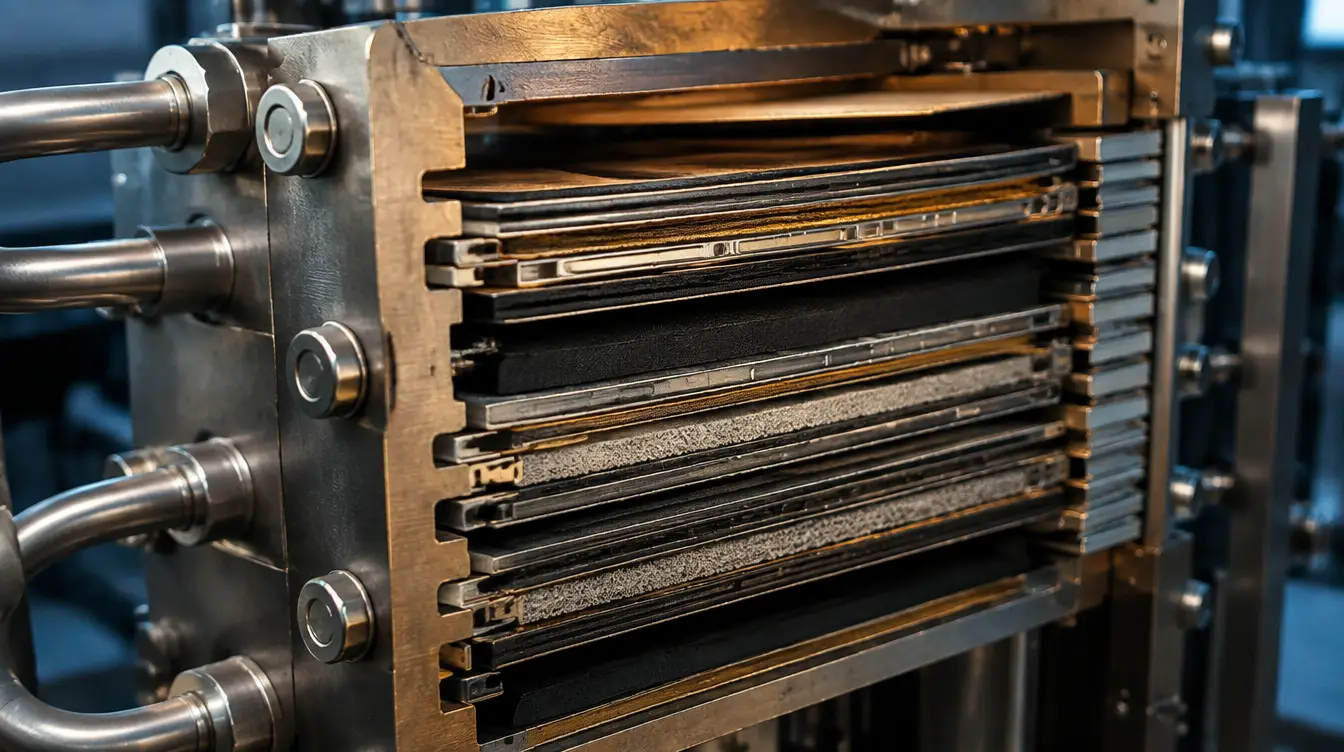
What actually happens inside a natural gas fuel cell?
A fuel cell is built from two electrodes and anode and a cathode separated by an electrolyte, and it produces electricity through an electrochemical reaction rather than by burning anything. The Department of Energy describes the core process simply fuel is fed to the anode, air is fed to the cathode, and a catalyst strips electrons from the fuel, sending them through an external circuit as usable electricity while the remaining ions migrate through the electrolyte to complete the reaction.
For a natural gas fuel cell specifically, the gas doesn't go straight into that reaction a reformer first converts the natural gas into a hydrogen-rich stream, which then feeds the electrochemical process the same way pure hydrogen would.
Why do data centers use natural gas instead of pure hydrogen?
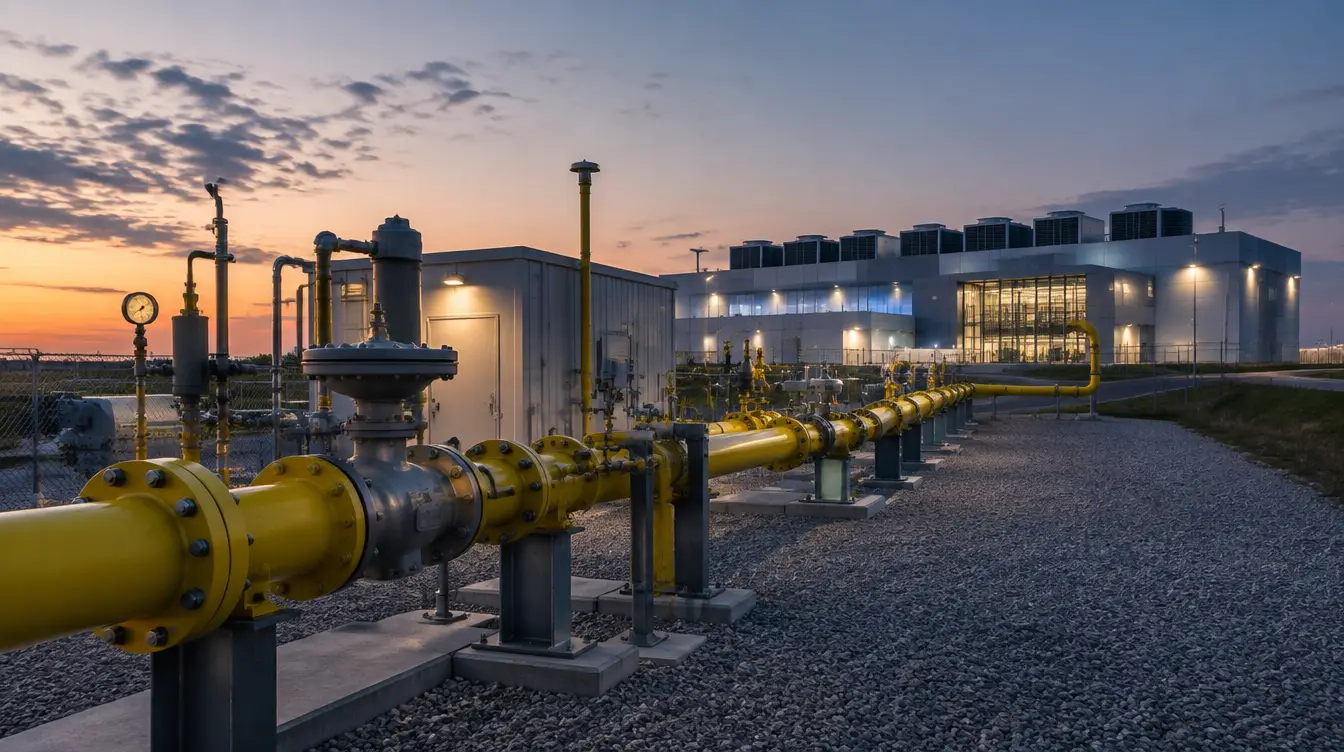
Because the natural gas pipeline network already exists, and hydrogen delivery infrastructure at the scale a data center needs largely doesn't yet. A fuel cell running on natural gas can tie into existing gas service and be operating in months, while a pure-hydrogen system depends on hydrogen production, storage, and delivery that most sites don't have access to today.
That's a sequencing decision, not a permanent one several fuel cell manufacturers design their systems to run on natural gas now and shift toward hydrogen blends as supply matures, without swapping out the underlying hardware.
What makes a fuel cell different from a backup generator?
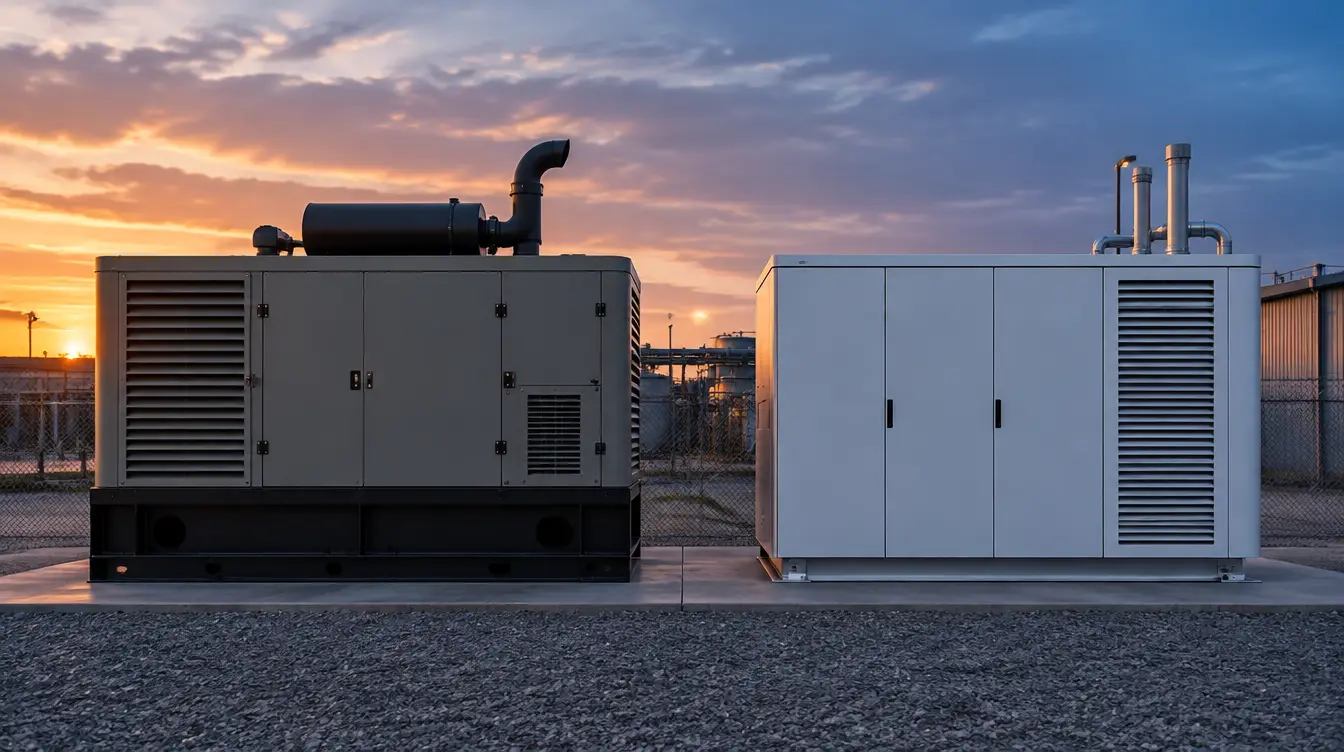
A generator burns fuel to spin a turbine a fuel cell converts fuel to electricity directly, with no combustion and no moving parts in the reaction itself. That difference shows up as continuous, primary power rather than emergency backup fuel cells can operate at over 90% capacity factor as direct current sources, compared to a diesel generator that's designed to run occasionally, not as the primary supply.
Diesel generator | Natural gas fuel cell | |
|---|---|---|
How it makes power | Combustion drives a turbine | Electrochemical reaction no combustion |
Typical role | Emergency backup | Continuous primary or supplemental power |
Output | AC | DC (converted via inverter) |
Local air pollutants | Significant (NOx,PM, CO) | Negligible: no combustion byproducts |
Can a fuel cell actually keep up with AI's swinging power demand?
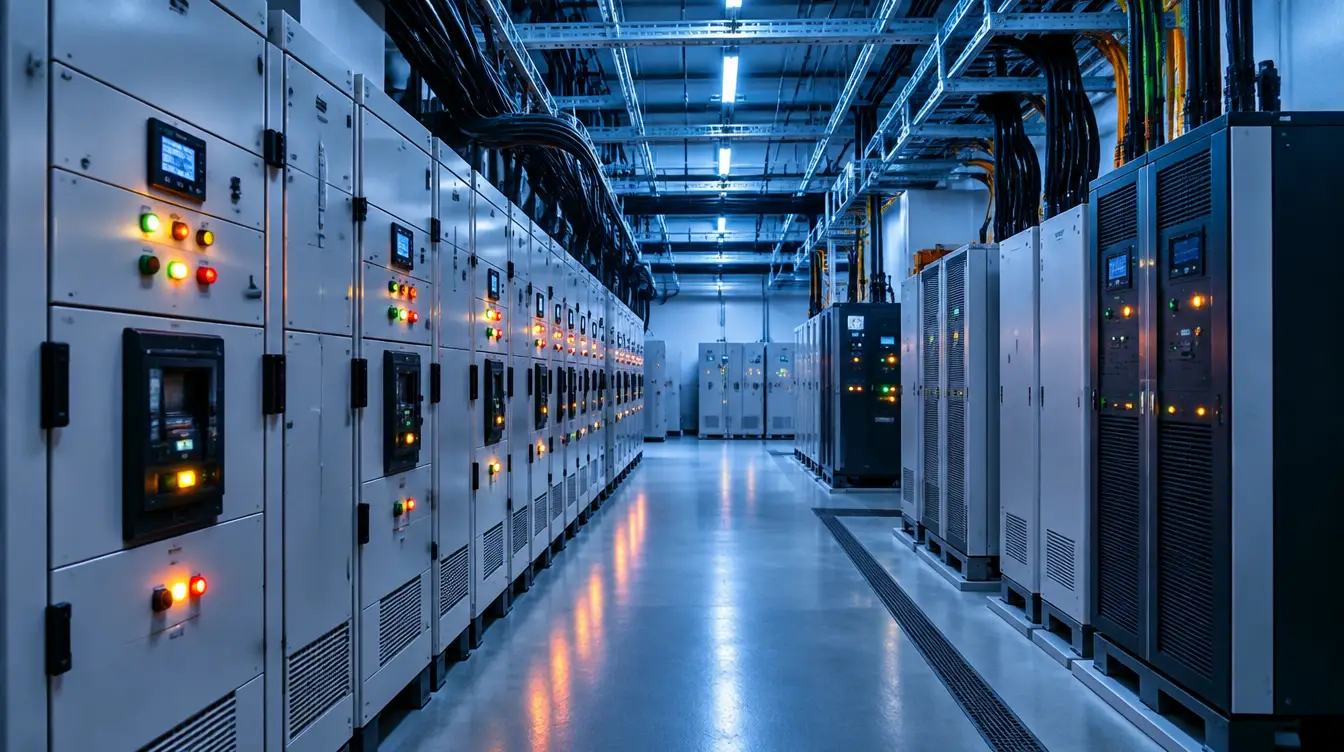
Reasonably well, though not instantly on its own. AI training and inference workloads can swing power draw by 50% within minutes, and fuel cells can respond to large step-load changes within seconds fast enough to track most of that variation, though data centers increasingly pair fuel cells with supercapacitors or batteries to close the gap down to millisecond response times for the sharpest spikes.
That pairing, not the fuel cell alone, is what lets a site handle both steady baseline load and the sudden swings a GPU cluster produces.

What happens to the carbon dioxide a natural gas fuel cell produces?
It's real, but small compared to combustion-based alternatives. Because there's no flame, a natural gas fuel cell doesn't produce the nitrogen oxides, sulfur oxides, or particulate matter a combustion engine does. Microsoft's own estimates, cited in a Data Center Dynamics analysis, put the reduction at up to 91% for nitrogen oxides and 68% for carbon monoxide compared to combustion, though the reforming process does still release some CO2, since it's extracting hydrogen from a carbon-containing fuel.
A pure-hydrogen fuel cell (a PEM fuel cell, specifically) avoids that CO2 output entirely, producing only water which is part of why the industry treats natural gas as a bridge fuel rather than the destination.
Does a natural gas fuel cell qualify for any tax credit?
Yes and the fuel it runs on doesn't change that. The federal fuel-cell investment tax credit under Section 48E applies to the cost of qualified fuel-cell property itself, at a flat 30% rate, regardless of whether the system is running on natural gas today or shift toward hydrogen later.
That's a separate question from the 45V clean hydrogen production credit, which only applies to a facility actually producing qualified hydrogen a natural gas fuel cell consuming pipeline gas doesn't trigger it. If your data center or your fuel cell project is weighing that distinction, or sitting on a credit you're not sure how to use, Cenet Capital works with developers and operators on clean energy tax credits, on a direct or correspondent basis, at competitive pricing.
Does your fuel cell setup qualify for the 48E credit?
Whether you're running natural gas today or planning a hydrogen transition, the 30% fuel cell investment credit applies either way. Cenet works with data center operators and developers to structure, price, and place clean energy tax credits as a direct buyer or a correspondent, at competitive pricing.
More Insights