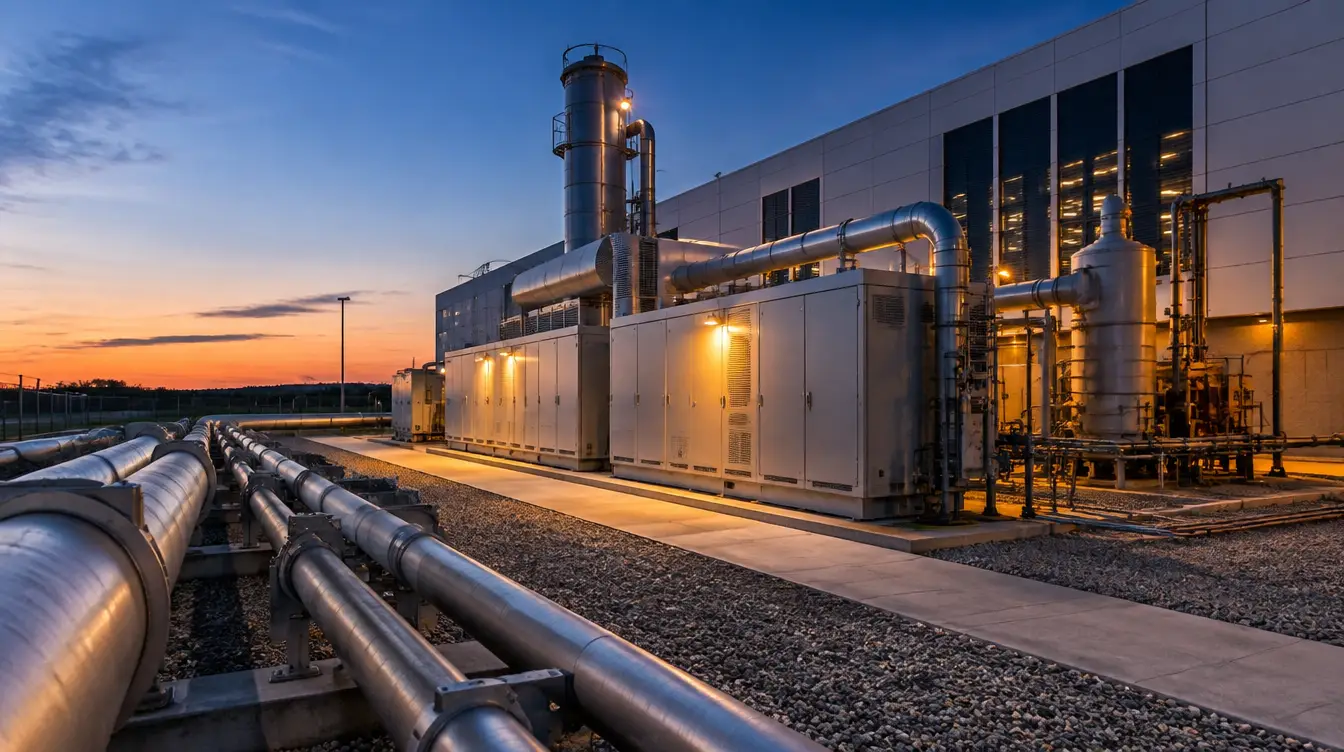
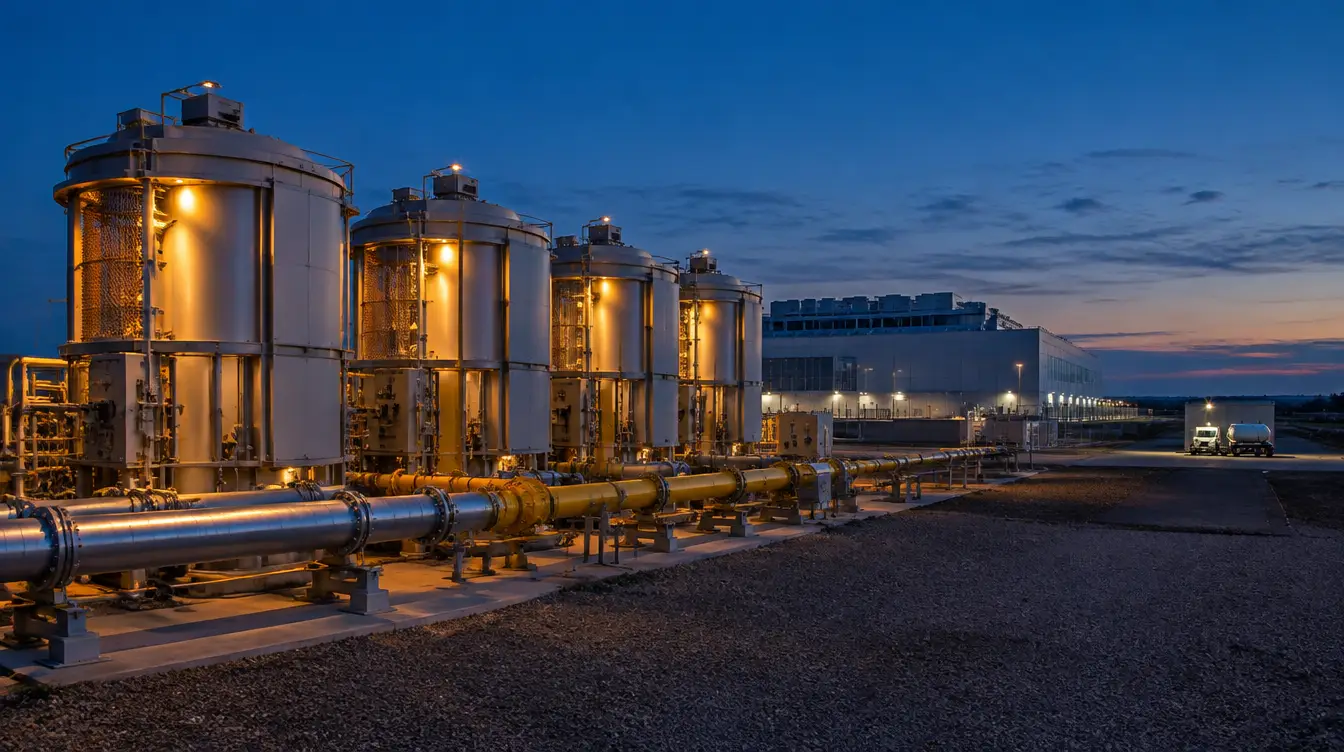
Almost every data center fuel cell running today uses natural gas, not pure hydrogen. Here's why, with real deployments and current hydrogen cost data.
Author -
Paulestini Francois
Published -
READ TIME
As which fuel actually runs a data center fuel cell today, and the honest answer surprises people who've been reading about "the hydrogen data center" almost all of them run on natural gas. Pure-hydrogen installations exist, but they're the exception, not early proof of a rule. Here's what's actually deployed right now, and why the gap between the two hasn't closed yet.

Are today's data center fuel cells running on natural gas or pure hydrogen?
The overwhelming majority run on natural gas, with pure-hydrogen installations still rare enough to be individually newsworthy. Bloom Energy's solid oxide fuel cells at Intel's Santa Clara data center campus have run on natural gas since the original 6.5 MW installation, while the hardware is hydrogen-compatible, Bloom's own leadership frames the fuel switch as something that happens "when it becomes economically viable" not yet.
The pattern holds at scale. Bloom Energy's fuel cell agreement with Oracle covers up to 2.8 GW of capacity, and it's natural gas doing the work, not hydrogen. Active Infrastructure's 780 MW campus runs the same way. Natural gas converted into a hydrogen-rich stream on-site, which is chemically a fuel cell process but not the same thing as sourcing pure hydrogen.
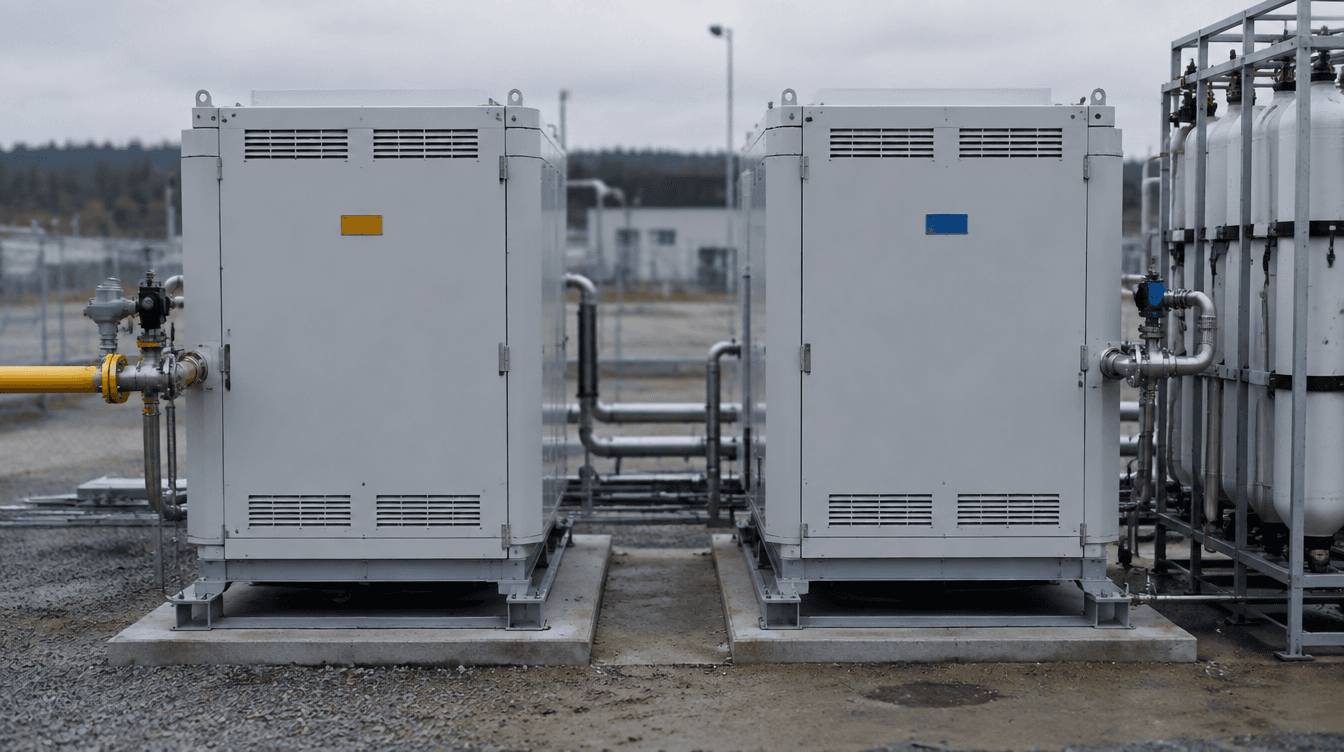
The counterexample is real but small. EdgeCloudLink operates a 1MW facility in Mountain View, California running entirely on delivered hydrogen, trucked in every two weeks. That's a genuine pure-hydrogen data center it's also roughly 0.04% the size of the Bloom-Oracle deal.
Why aren't more data centers using pure hydrogen fuel cells?
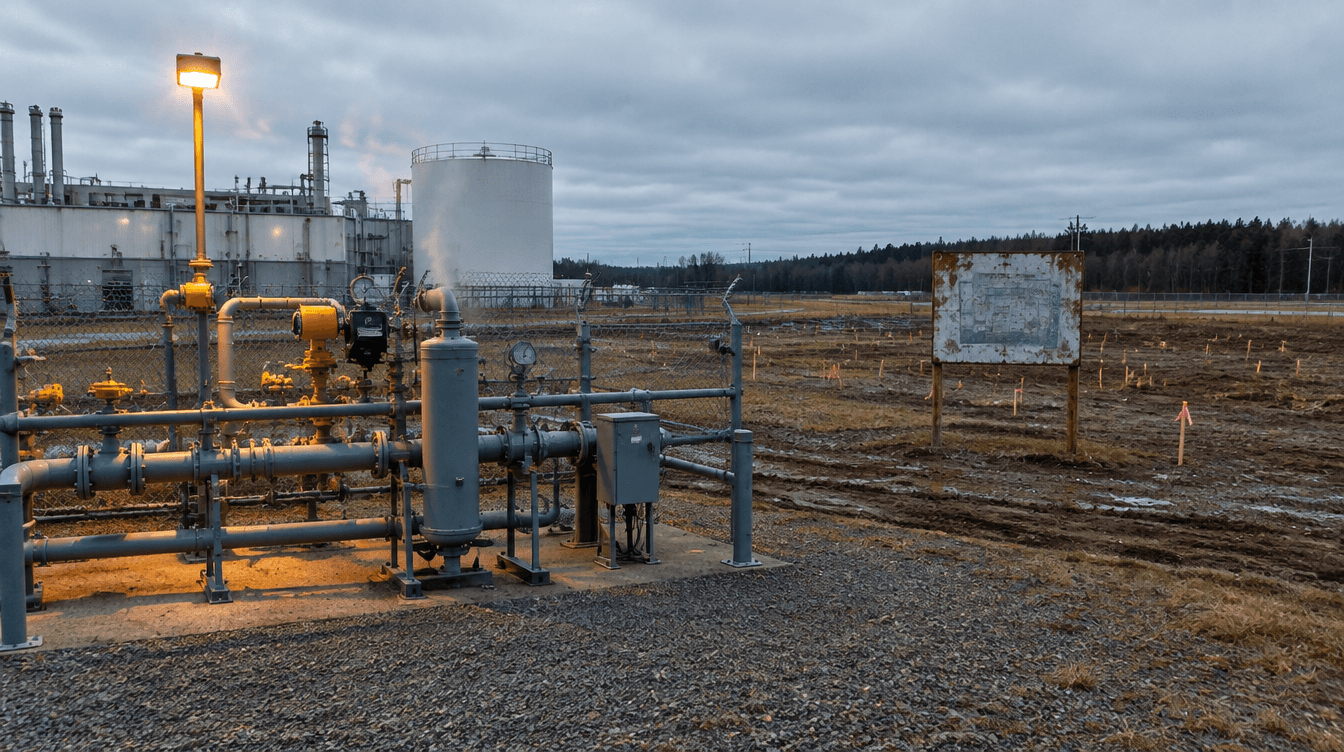
Pure hydrogen is more expensive, harder to source in bulk, and has almost no delivery infrastructure built for data center scale, while natural gas already has all three solved. Data Center Knowledge cites Burns & McDonnell's Megan Reusser on why hydrogen keeps getting excluded from data center power plans "its production being expensive and the fact that the US has limited infrastructure to produce, transport, or store it." Outside of refineries, hydrogen isn't sitting in a pipeline waiting to be tapped the way natural gas is.
That's an infrastructure problem more than technology one. A natural gas fuel cell can tie into existing gas service and start operating in months. A pure-hydrogen system needs hydrogen production, storage, and delivery that most sites simply don't have access to which is exactly why EdgeCloudLink's answer was trucking it in every two weeks rather than piping it in.
What does it actually cost to produce hydrogen a fuel cell needs?
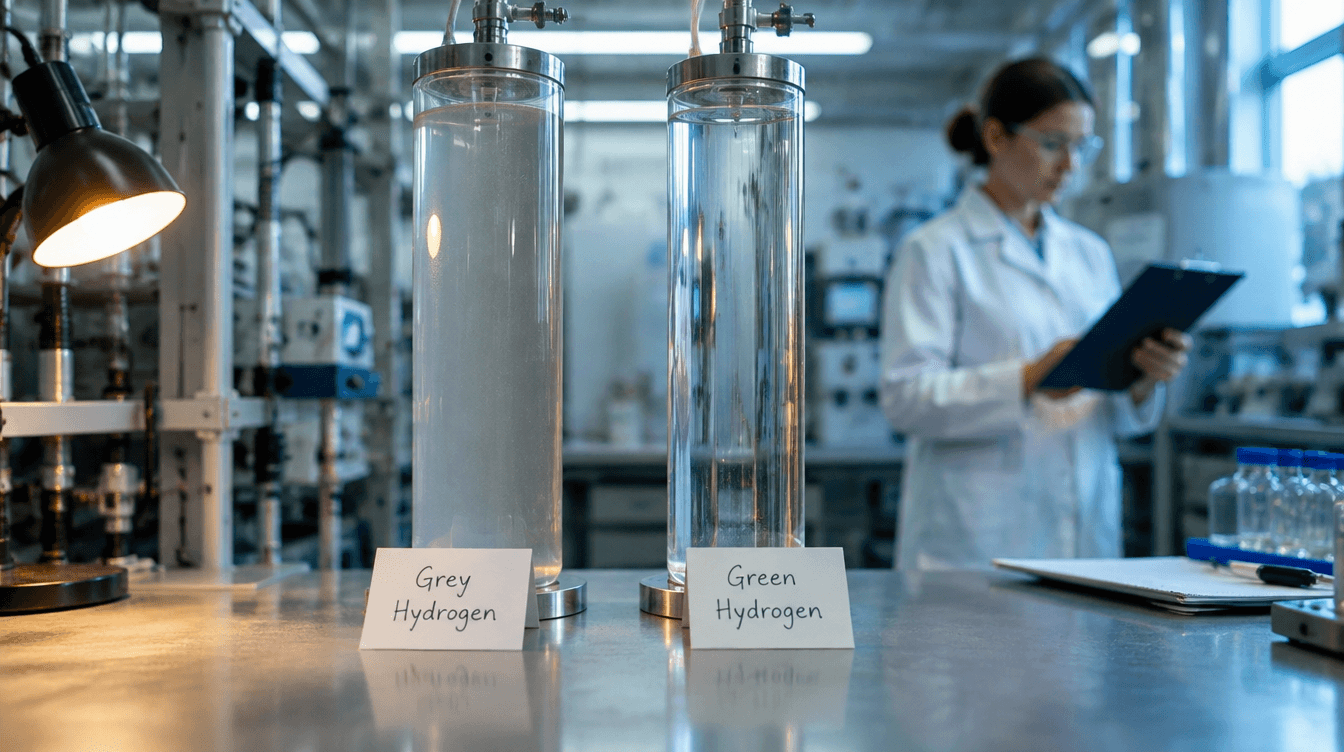
Grey hydrogen made from natural gas cost roughly $1.20 to $2.50 per kilogram, while green hydrogen made from renewable electricity runs $2.50 to $7.00 per kilogram even when the 45V tax credit applied, green hydrogen often still doesn't undercut natural gas. Green hydrogen's 2026 cost analysis puts the 45V credit's theoretical value at up to $3.00 per kilogram, but notes that compliance requirements around hourly renewable matching and deliverability cut electrolyzer utilization from roughly 55% down to about 30%, which erodes the subsidy's real-world impact. The effective cost of green hydrogen after applying 45V still lands around $1.50 to $3.50 per kilogram competitive with grey hydrogen in some scenarios, but not a clear win in most.
Fuel path | Typical cost | Infrastructure required |
|---|---|---|
Natural gas (direct or reformed on-site) | Existing pipeline gas pricing | Already built tie into gas service |
Grey hydrogen (from natural gas) | ~$1.20–$2.50/kg | Reforming equipment, no hydrogen pipeline needed |
Green hydrogen (unsubsidized) | ~$2.50–$7.00/kg | Electrolyzers, renewable power, storage, delivery |
Green hydrogen (after 45V credit, compliance-adjusted) | ~$1.50–$3.50/kg | Same as above, plus emissions/wage documentation |
Which real data centers are running which fuel right now?
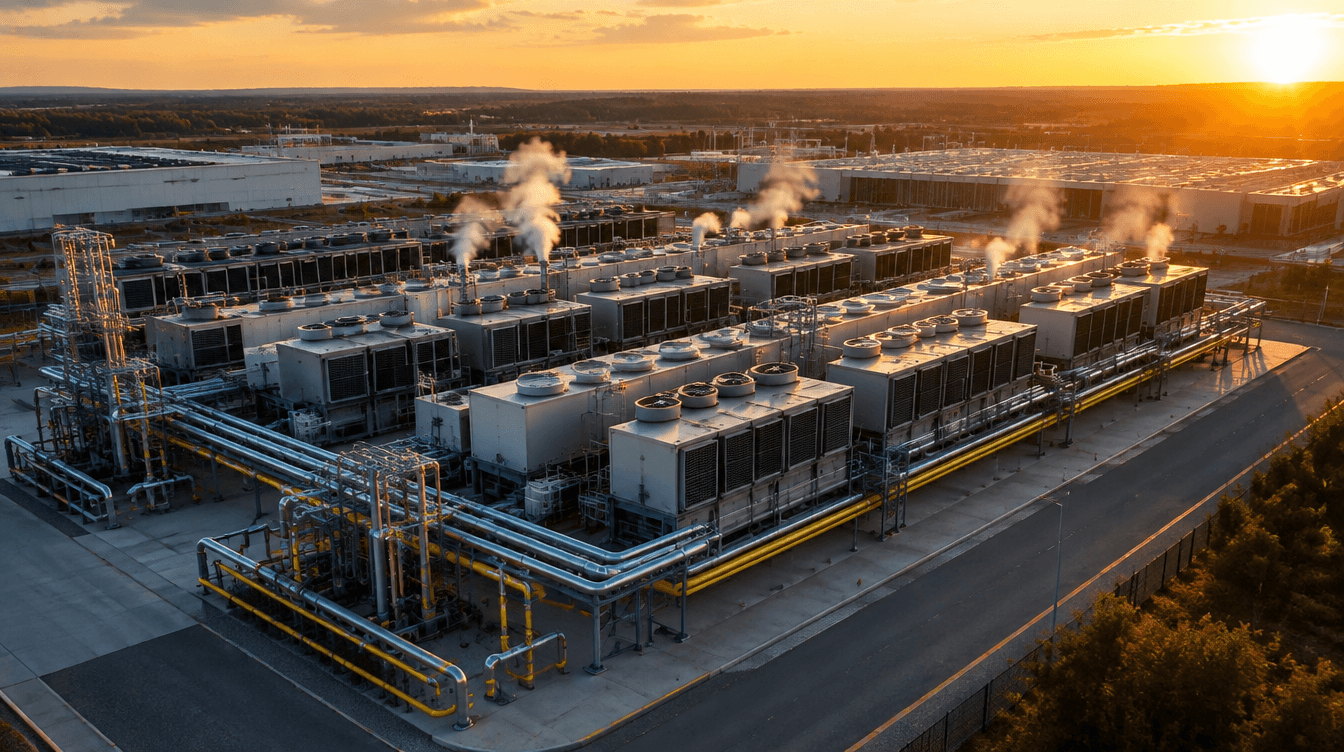
The named deployments split cleanly along line bigger and faster means natural gas, smaller and slower mean hydrogen.
Site | Operator | Fuel | Scale |
|---|---|---|---|
Santa Clara, CA | Intel / Bloom Energy | Natural gas | 6.5 MW (original), expanding Up to 2.8 GW agreement |
Multiple (Oracle campuses) | Oracle / Bloom Energy | Natural gas | Up to 2.8 GW agreement |
Active Infrastructure campus | Active Infrastructure / Bloom Energy | Natural gas (reformed on-site) | 780 MW campus |
Eindhover, Netherlands | NorthC | Natural gas + hydrogen (dual-fuel gas engines) | Not disclosed |
Mountain View, CA | EdgeCloudLink | Pure hydrogen (delivered) | 1 MW |
Does the tax credit change depending on which fuel the fuel runs on?
No the Section 48E fuel cell investment credit pays a flat 30% of qualifying property cost regardless of whether the systems burns natural gas or pure hydrogen. That's a distinct question from Section 45V clean hydrogen production credit, which only pays the entity actually producing qualified hydrogen not the data center consuming it, whichever fuel it runs on.
The distinction is exactly why most data center fuel cell projects claim 48E rather than 45V they're buying and installing equipment, not producing hydrogen. If your project is untangling which credit actually applies or what natural gas fuel cells are doing mechanically inside the unit Cenet Capital works with data center operators and developers on the tax credit side, as a direct buyer or correspondent, at competitive pricing.
Will data centers eventually shift from natural gas to hydrogen?
Probably, for some sites, but not on a fixed timeline most fuel cell manufacturers are building natural gas systems designed to accept a hydrogen blend later rather than betting on hydrogen now. That sequencing shows up directly in vendor language Bloom's own hardware is described as hydrogen-compatible today, with the fuel switch scheduled for whenever hydrogen "becomes economically viable" rather than committed date. Until grey or green hydrogen production and delivery infrastructure closes the cost and availability gap documented above, natural gas remains the fuel that actually gets a data center fuel cell project financed and running on a timeline AI workloads can wait for.
Running (or planning) a fuel cell on natural gas? 48E doesn't care.
Whichever fuel your data center's fuel cell runs on today, the 30% investment credit applies the same way. Cenet Capital works with operators and developers to structure, price, and place 48E and 45V credits, as a direct buyer or correspondent, at competitive pricing.

More Insights