Data Centers & Energy
A data center's on-site fuel cell may qualify for the 45V hydrogen credit, the 48E Fuel cell ITC, or neither. Here's how to tell which applies.
Author -
Paulestini Francois
Published -
READ TIME
QUICK ANSWER
Section 45V is a production credit: it pays the party that produces qualified clean hydrogen, priced per kilogram based on lifecycle emissions. Section 48E is an investment credit: it pays a flat percentage of the cost of the fuel cell property itself, regardless of what happens to the hydrogen afterward.
KEY FACTS
Does a data center’s on-site fuel cell actually qualify for 45V? Only if the data center’s own facility is producing the hydrogen, not merely consuming it.
What’s the deadline to lock in eligibility? For 45V, the window closed earlier than a lot of developers expected: under the One Big Beautiful Bill Act (OBBBA), a hydrogen production facility must begin construction before January 1, 2028, five years earlier than the original 2033 deadline.
What are the domestic content requirements for the fuel cell ITC? To claim the full 30% rate under 48E, a growing share of the steel, iron, and manufactured components has to be sourced domestically 45% in 2026, rising to 50% in 2027 and 55% from 2028 onward.
Can you stack 45V and the 48E fuel cell ITC on the same project? Generally, no. Not on the same hydrogen production activity.
What happens if the data center doesn’t have enough tax liability to use the credit? This is where most of these projects actually get stuck, not on eligibility, but on usability.
Which fuel cell tax credit applies to a data center: 45V or the fuel cell investment tax credit? Usually the fuel cell investment tax credit, which is based on the cost of the fuel cell equipment. 45V eligibility belongs to whoever produces qualified clean hydrogen, so a data center only claims 45V if it makes its own low-emission hydrogen on site and meets the emissions and verification rules.
What’s the difference between 45V and the fuel cell ITC?
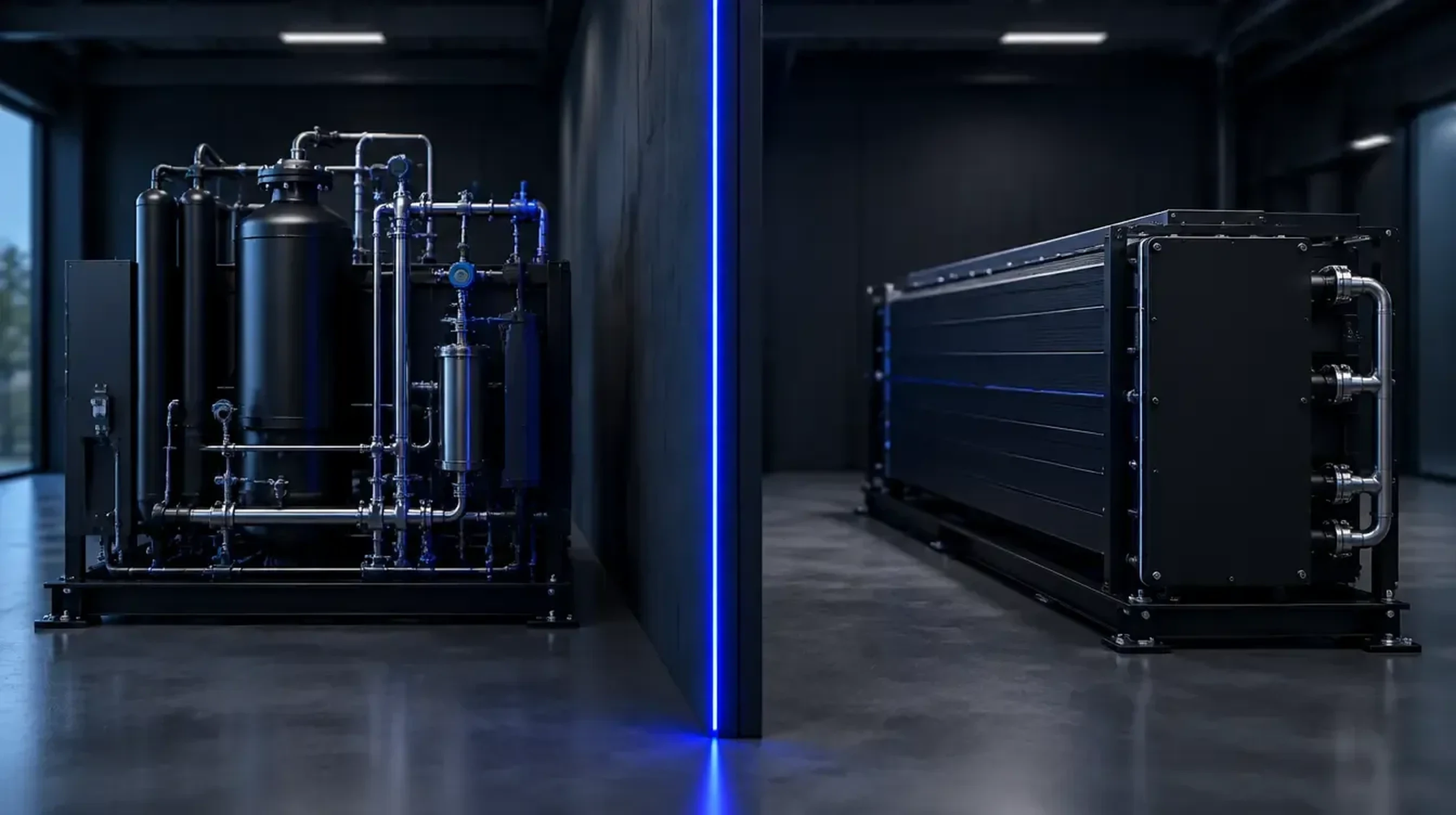
Section 45V is a production credit: it pays the party that produces qualified clean hydrogen, priced per kilogram based on lifecycle emissions. Section 48E is an investment credit: it pays a flat percentage of the cost of the fuel cell property itself, regardless of what happens to the hydrogen afterward.
For most data centers, that distinction settles the question immediately. A data center that buys and installs fuel cell system is investing in equipment that’s Section 48E territory, now a flat 30% investment tax credit for qualified fuel-cell property placed in service after December 31, 2025 45V only comes into play if the data center (or an affiliated entity) is itself producing the hydrogen that feeds the fuel cell on-site electrolysis, for instance, not just running the system.
Credit | What it pays for | Rate | Who claims it |
|---|---|---|---|
45V (production) | Hydrogen actually produced, per kilogram, scaled to lifecycle emission | Up to $3.00/kg | The hydrogen producer |
48E-j (fuel cell ITC) | Cost of qualified fuel-cell property | Flat 30% of basis | The property owner |
Does a data center’s on-site fuel cell actually qualify for 45V?
Only if the data center’s own facility is producing the hydrogen, not merely consuming it. Buying hydrogen from a third party, or running a fuel cell on natural gas with hydrogen blending down the line, doesn’t make the data center a “qualified clean hydrogen production facility” under the statute.
The credit itself is calculated on a sliding scale tied to how clean the production process is. The IRS is explicit that the amount depends on the emissions intensity of the production process and on meeting prevailing wage and apprenticeship requirements during construction. If a data center operator wants to actually generate hydrogen on-site rather than just run fuel cells, that’s the facility that would claim 45V likely as a separate legal entity from the data center itself, given how differently the two credits are structured.
What’s the deadline to lock in eligibility?
For 45V, the window closed earlier than a lot of developers expected: under the One Big Beautiful Bill Act (OBBBA), a hydrogen production facility must begin construction before January 1, 2028, five years earlier than the original 2033 deadline. Facilities that start in time still earn 45V for 10 years after they’re placed in service. The 48E fuel cell ITC runs on a different clock entirely it applies to property placed in service after December 31, 2025, with no equivalent expiration built in yet.
That means a project trying to stack both credits on-site hydrogen production under 45V, plus a fuel cell investment under 48E is racing two different deadlines at once, and the compressed 45V timeline is the one that actually constrains the schedule.
What are the domestic content requirements for the fuel cell ITC?
To claim the full 30% rate under 48E, a growing share of the steel, iron, and manufactured components has to be sourced domestically 45% in 2026, rising to 50% in 2027 and 55% from 2028 onward. Miss the threshold and the credit doesn’t disappear, but it can be reduced, which is why procurement decisions on fuel cell hardware need to happen alongside the tax planning, not after it.
Developers can also lock in “begin construction” status through a 5% safe harbor incurring at least 5% of project’s qualified basis by a set date which is worth confirming with a tax advisor before signing equipment purchase orders.

Can you stack 45V and the 48E fuel cell ITC on the same project?
Generally, no. Not on the same hydrogen production activity. The IRS’s final 45V regulations require facilities to make an irrevocable election between 45V, the Section 45Q carbon capture credit, or a Section 48 energy investment credit, and they disallow overlapping claims for the same production activity. What a vertically integrated operation can often do is separate the two: claim 48E on the fuel cell property itself, and 45V on the distinct hydrogen production facility that happens to supply it which is a structuring question, not a tax-rate question.
Selling a $21.0M credit at 90¢ cuts the installed cost by 27%. The dashed outline shows the cost before the credit.
Illustrative only. Cost range reflects installed on-site SOFC pricing. Credit eligibility and rate depend on the technology, construction start date, bonus requirements and current law. Confirm with tax counsel.

What happens if the data center doesn’t have enough tax liability to use the credit?
This is where most of these projects actually get stuck, not on eligibility, but on usability. A data center or hydrogen producer that qualifies for a credit but doesn’t have enough federal tax liability to absorb it isn’t stuck holding a piece of paper: under Section 6418 transferability, eligible transferable credits including 45V and fuel cell property credits can be sold to third party buyer for cash, with the price negotiated directly between buyer and seller.
That’s a separate transaction from the tax planning above, and it’s the more common reason developers end up talking to a buyer or correspondent like Cenet Capital, not because the eligibility is hard, but because turning an eligibility credit into cash on a workable timeline is its own problem. If that’s where you are, Cenet Capital works with developers on both a direct and correspondent basis to place 45V, 48, 48C and 30C credits at competitive pricing, without waiting on the credit to be usable against your own tax bill.
Frequently Asked Questions
What's the difference between 45V and the fuel cell ITC?
Section 45V is a production credit paid per kilogram of qualified clean hydrogen produced. Section 48E is an investment credit paid as a flat 30% of the cost of qualified fuel-cell property, regardless of the hydrogen source.
Does a data center's on-site fuel cell actually qualify for 45V?
What's the deadline to lock in 45V eligibility?
What are the domestic content requirements for the fuel cell ITC?
Can you stack 45V and the 48E fuel cell ITC on the same project?
Figured out whether you qualify for 45V, 48E, or both?
Whichever applies hydrogen production under 45V, fuel cell property under 48E, or both Cenet works with developers and operators to structure, price, and place the credit, as a direct buyer or a correspondent, at competitive pricing.

More Insights