
The commercial solar Investment Tax Credit pays 30% of project cost under Section 48E, with bonus adders and depreciation stacking on top. Here's how it actually works.
Author -
Paulestini Francois
Published -
READ TIME
The solar Investment Tax Credit is a dollar-for-dollar reduction in federal tax liability, not a deduction, and for a commercial project it's worth a lot more than the headline 30% once bonus adders and depreciation are stacked on top. Here's what the credit actually pays, who can claim it, what changed under the One Big Beautiful Bill Act (OBBBA), and where the real deadlines sit right now.

What is the solar Investment Tax Credit, and how does it work for a commercial project?
Section 48E is the current version of the solar ITC, and it credits 30% of a commercial solar installation's qualifying project cost directly against the owner's federal tax bill. Sunwise's breakdown of the commercial credit puts it plainly: "Section 48E, the investment tax credit, allows eligible businesses to claim 30 percent of qualified solar installation costs as a dollar for dollar reduction in federal tax liability." The entity that owns the system for tax purposes is the one that claims it which matters for lease and PPA structures where ownership and the electricity buyer aren't the same party.

What percentage can a commercial solar project actually claim under Section 48E?
The 30% base rate can climb toward roughly 50% once the domestic content, energy community, and low-income community bonus adders are stacked on, though each adder has its own eligibility test. According to Sunwise, the available adders are a "domestic content adder: up to 10 percent for U.S.-manufactured components," an "energy community adder: 10 percent for brownfield sites," and a "low-income community adder: 10 to 20 percent for qualifying projects in designated low-income areas" and combined, "businesses may raise the credit to around 50 percent through bonus credits."
Credit component | Rate | Qualifying condition |
|---|---|---|
Base ITC | 30% | Standard commercial solar installation |
Domestic content adder | Up to 10% | U.S.-manufactured steel, iron, and manufactured components meet the required percentage |
Energy community adder | 10% | Project sited on a brownfield or in a community tied to fossil fuel employment/closures |
Low-income community adder | 10–20% | Project sited in or serving a designated low-income community, subject to an annual capacity allocation |
The low-income adder is capacity-limited and allocated competitively the IRS's own Low-Income Communities Bonus Credit program page describes it as an allocation process a project applies into, not an automatic add-on like the other two.
How does bonus depreciation interact with the ITC?
Claiming the ITC reduces the project's depreciable basis by half the credit amount, and under OBBBA's permanent 100% bonus depreciation, a business can now deduct the entire remaining depreciable amount in year one instead of spreading it over several years. Sunwise's example on a $500,000 system shows the combination recovering "$150,000 through the ITC and tens of thousands more through first-year depreciation," since the depreciable basis after the haircut is "approximately 85 percent of the original cost."
In practice, that means the ITC and depreciation aren't two separate incentives to choose between they're designed to stack, and the after-tax cost of a commercial solar project is usually well below the sticker price once both are counted.
What are the construction-start and placed-in-service deadlines after OBBBA?
OBBBA moved up the solar ITC's phase-out significantly: a project has to begin construction by July 4, 2026 to use the more flexible timeline, and any project starting construction after that date must be fully placed in service by December 31, 2027 with no extension available. MSPC's analysis of the deadline states that "construction of the solar facilities must begin on or before July 4, 2026 to qualify for the 30% ITC and certain bonus credit increases," and projects that hit that mark must be "placed in service by December 31, 2027," though continuity safe harbor rules can extend that window to up to four years from the construction-start date.
Scenario | Deadline |
|---|---|
Construction begins on or before July 4, 2026 | Placed in service by Dec. 31, 2027 (up to 4 years under continuity safe harbor) |
Construction begins after July 4, 2026 | Must be placed in service by Dec. 31, 2027 no extension |
That's a real acceleration from the prior framework. Carr, Riggs & Ingram's analysis notes that under the original IRA structure, these credits "were set to expire in 2033 or 2034 ... or when greenhouse gas emissions fell below a certain threshold whichever was later," and OBBBA eliminated that emissions-based extension entirely.
Do the new Foreign Entity of Concern rules affect a commercial solar project?
Yes, in two separate ways: an ownership/control restriction that applies to Section 48E generally, and a material assistance cost-sourcing rule that per current guidance applies specifically to Section 45Y facilities and Section 48E storage property. Novogradac's breakdown of the FEOC rules states that "taxpayers and their related parties are prohibited from making payments to a [Specified Foreign Entity] under any contract or agreement that grants the SFE 'effective control' over a qualified energy facility," and for Section 48E specifically, a disqualifying payment within 10 years of project completion triggers 100% recapture of previously claimed credits.
The material assistance rule which caps how much of a project's direct costs can trace back to a prohibited foreign entity takes effect "after Dec. 31, 2025" and is described in current guidance as applying to Section 45Y facilities and Section 48E storage property. Whether that cost-sourcing test extends to standard 48E solar generation property (as opposed to storage) is worth confirming with counsel before construction begins, since this is an area Treasury guidance is still actively developing.
What if a project doesn't have enough tax liability to use the full credit?
A developer or business that can't absorb the full 30%-plus credit against its own tax bill can transfer all or part of it to an unrelated buyer for cash under Section 6418, the same mechanism that applies to every other transferable federal energy credit.
Illustrative example: A hypothetical commercial property owner who installs a $2 million solar system and earns roughly $600,000 in combined ITC value has no realistic way to use that much credit against its own tax liability in a single year. Rather than carrying it forward, the owner could transfer the credit to an unrelated corporate buyer for cash. This is a generic illustration of how the mechanism works, not a real transaction, and no specific pricing is implied. For the full mechanics eligible credit types, the registration process, and what OBBBA did and didn't change see what transferable tax credits actually are.
What does the solar ITC actually add up to for a commercial project?
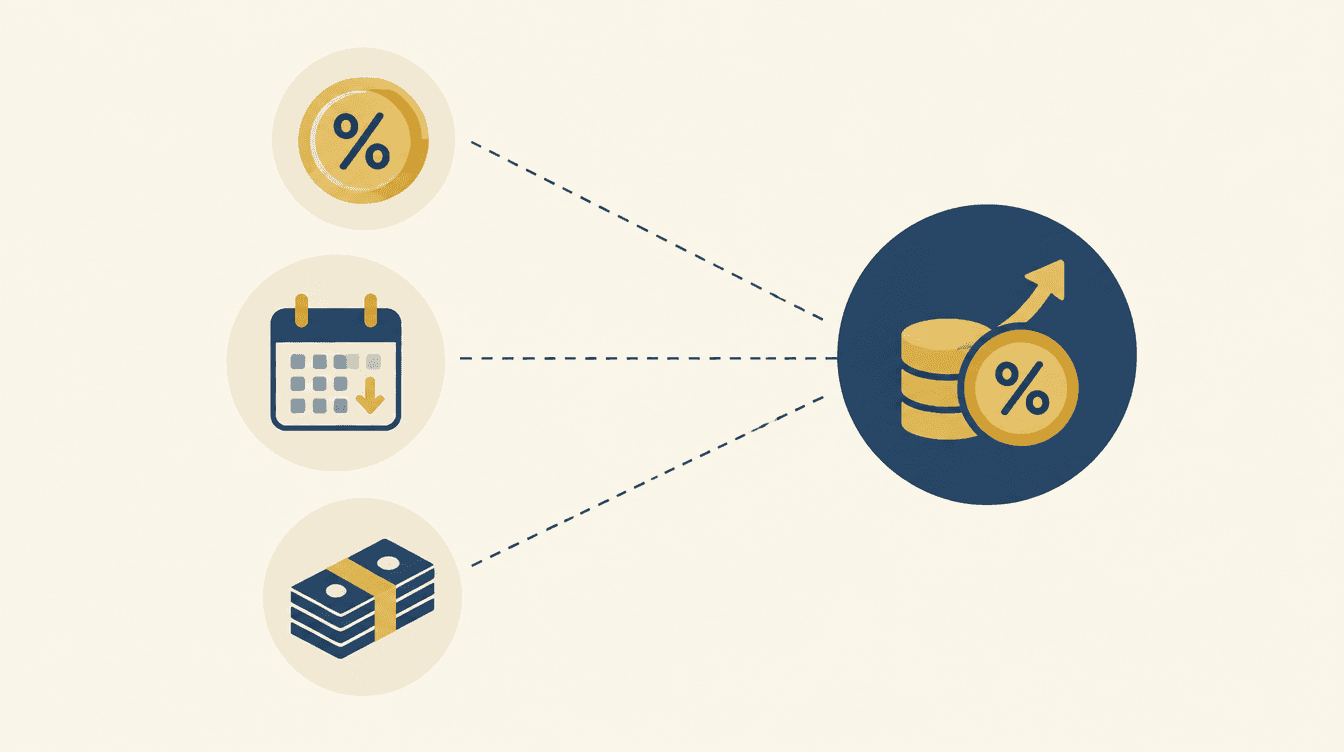
Between the base 30% credit, bonus adders that can push it toward 50%, and depreciation stacked on top, a commercial solar project's real after-tax cost is often less than half its sticker price provided it clears the July 4, 2026 construction deadline and the FEOC restrictions that now come with it. The credit itself hasn't shrunk under OBBBA; what changed is the runway to use it and the ownership/sourcing conditions attached. A project that begins construction now, sources its components carefully, and places the system in service on schedule can still capture the full stack.
If you're weighing whether your project qualifies, or whether transferring an ITC you can't fully use makes more sense than carrying it forward, Cenet Capital works with developers on both a direct and correspondent basis to structure and place transfers, at competitive pricing.
30% is the floor, not the ceiling. Not sure what your project actually clears?
Between bonus adders, depreciation, and the July 2026 construction deadline, the real value of a commercial solar ITC varies a lot by project. Cenet Capital works with developers and owners on both a direct and correspondent basis to structure and place credit transfers, at competitive pricing.

More Insights