
The commercial solar tax credit isn't automatic. Here's exactly which businesses, property types, and entities qualify under Section 48E and what disqualifies a project.
Author -
Paulestini Francois
Published -
READ TIME
Almost every commercial solar pitch quotes a 30% tax credit, but qualifying for that number isn't automatic it depends on the size of the system, who owns it, and whether the project meets a labor requirement most sales conversations never mention. Here's what actually determines whether a business qualifies for the commercial solar tax credit, and for how much.
What businesses actually qualify for the commercial solar tax credit?
Any taxpayer that owns a "qualified facility" a solar energy property placed in service after December 31, 2024 can claim the Section 48E credit, and that includes for-profit businesses, along with tax-exempt and government entities that access it through a separate payment mechanism. The IRS's own Section 48E guidance states plainly: "taxpayers with a qualified facility and energy storage technology placed in service after Dec. 31, 2024 may claim the credit." Ownership is what triggers eligibility a business leasing space under a system it doesn't own generally isn't the one claiming the credit; the system's owner is.
Why does everyone say the credit is 30% when the statute's base rate is only 6%?
The Section 48E base credit is actually 6% of qualified investment, but it multiplies to 30% for any project that either meets the prevailing wage and apprenticeship requirements or falls under a 1-megawatt capacity exemption which is why 30% is the number nearly every commercial project actually lands on. The IRS's prevailing wage and apprenticeship FAQ confirms that "a taxpayer that meets the prevailing wage and apprenticeship requirements ... will multiply the base amount of the tax incentive ... by five," and separately notes that "a qualified facility that has a maximum net output of less than one megawatt ... is eligible for the increased credit amount without satisfying the prevailing wage and apprenticeship requirements."
Scenario | Effective credit rate |
|---|---|
Base rate, requirements not met, over 1 MW | 6% |
Under 1 MW (exempt from labor requirements) | 30% |
Over 1 MW, meets prevailing wage + apprenticeship | 30% |
Over 1 MW, requirements not met | 6% (base only, no multiplier) |

Does a nonprofit or government entity qualify, even though it doesn't owe federal tax?
Yes — tax-exempt organizations, government entities, and tribal governments qualify for the same credit through "elective pay" (also called direct pay), which turns the credit into a cash refund instead of a tax offset, while for-profit businesses use the standard credit or transfer it. According to Sunwise's breakdown of direct pay, qualifying "applicable entities" include "tax-exempt organizations under Section 501(c) ... including 501(c)(3) charities, churches, synagogues, mosques, temples, and religious organizations," "state and local government entities, including municipalities, counties, school districts, public universities, and government agencies," and "tribal governments and Alaska Native Corporations," along with rural electric cooperatives and the Tennessee Valley Authority. For-profit businesses don't qualify for elective pay they claim the standard ITC against their own tax liability, or transfer it to a buyer for cash if they can't use it.
What size or type of solar installation actually qualifies?
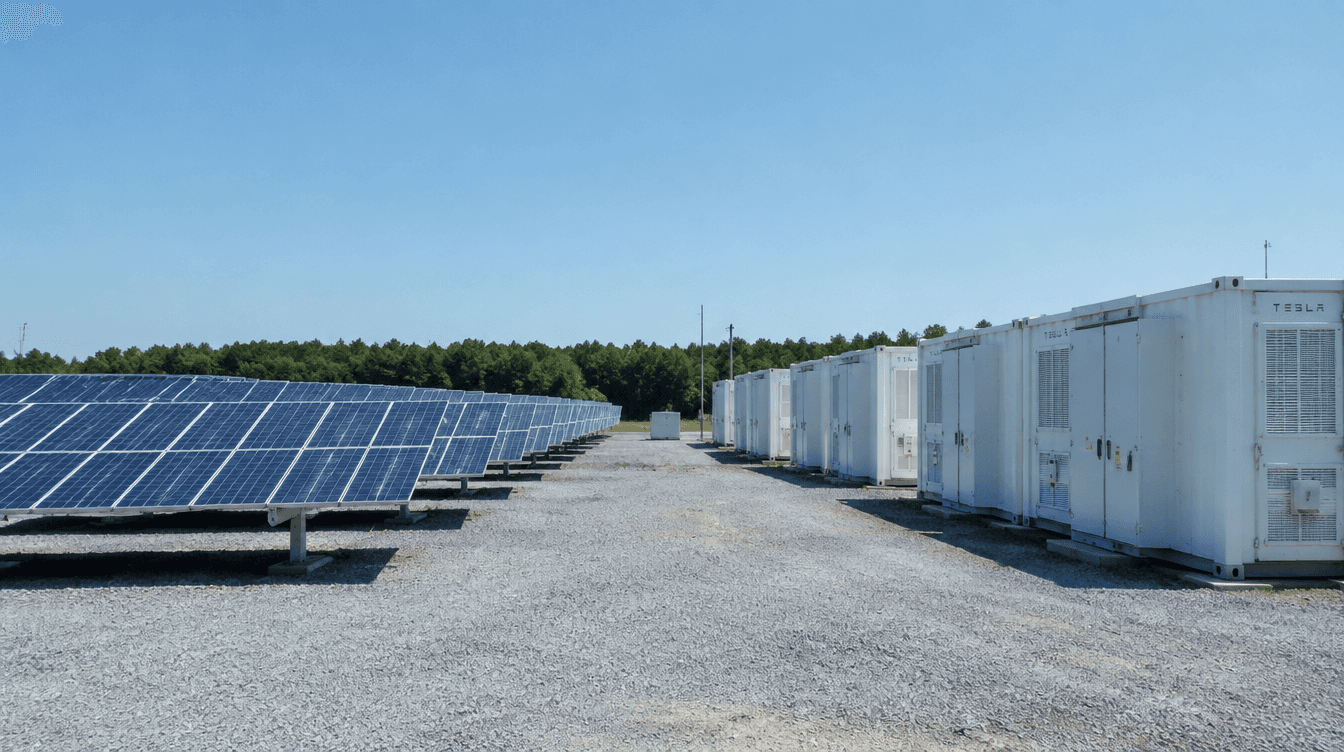
Both the solar generation property itself and paired energy storage technology qualify under Section 48E, with no hard upper size limit the 1-megawatt threshold determines whether the labor requirements apply, not whether the project qualifies at all. A rooftop array on a warehouse, a ground-mount system on unused commercial land, and a carport-integrated system can all qualify, provided the property is placed in service after December 31, 2024 and used in a trade or business or held for the production of income. For the construction-start and placed-in-service deadlines that determine the qualification window itself, see how the solar ITC works for commercial projects.

Do all businesses automatically get the 5x multiplier, or do they have to do something?
A project over 1 megawatt has to actively satisfy three separate labor conditions to earn the multiplier: a prevailing wage requirement, an apprenticeship labor-hour percentage, and an apprentice participation minimum. The IRS's prevailing wage FAQ describes prevailing wage as paying "wages at rates that are not less than the prevailing rates determined by the Department of Labor in accordance with ... the Davis-Bacon Act," and the apprenticeship piece as three components together: a labor-hours requirement, a ratio requirement matching registered apprenticeship program standards, and a participation requirement of "at least one apprentice if 4+ workers employed."
Requirement | What it covers |
|---|---|
Prevailing wage | Laborers and mechanics paid at Davis-Bacon Act rates for the project's location |
Apprenticeship labor hours | A required percentage of total labor hours performed by registered apprentices |
Apprenticeship ratio | Apprentice-to-journeyworker ratio matching the applicable registered program |
Apprenticeship participation | At least one apprentice on any contractor/subcontractor crew of 4 or more |
Does a small business without a compliance team still qualify for the full 30%?
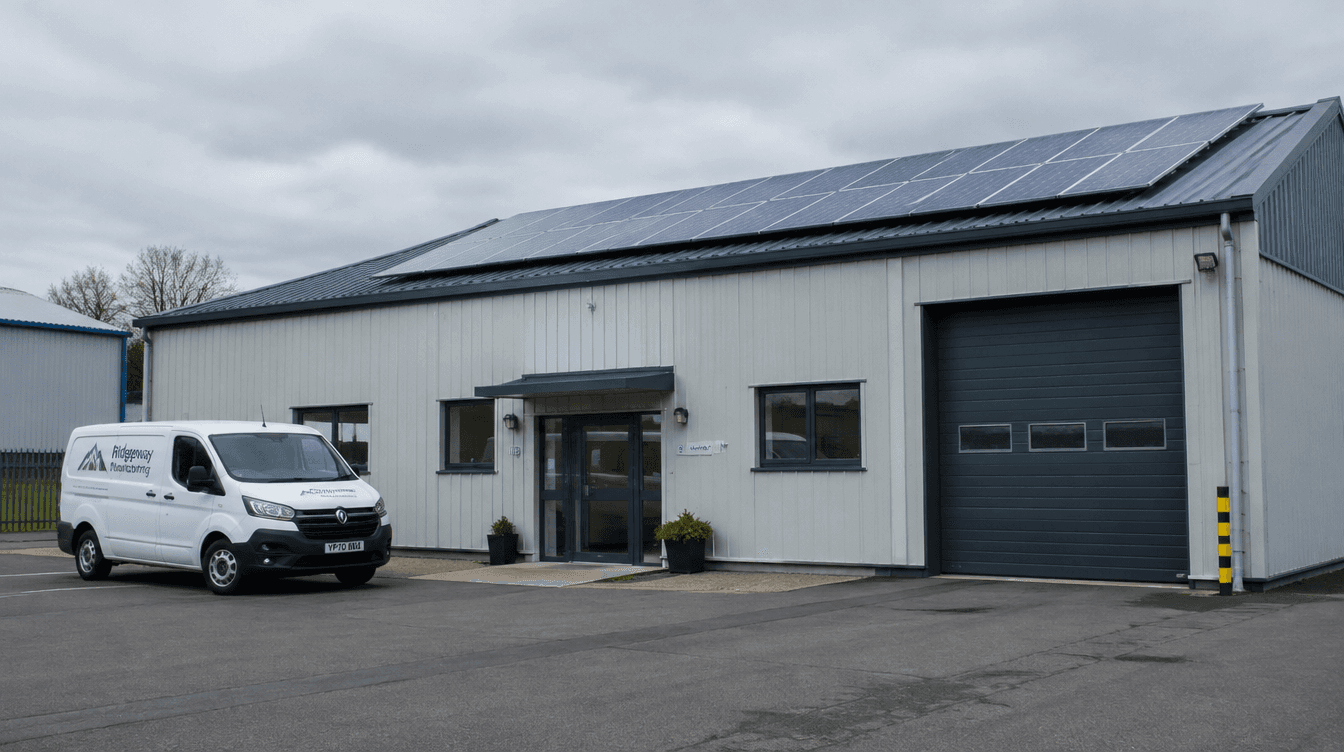
Yes a business installing a system under 1 megawatt qualifies for the full 30% automatically, without tracking prevailing wage rates or apprenticeship ratios at all. Illustrative example: A hypothetical small manufacturer installing a 400 kW rooftop array on its facility falls well under the 1 MW threshold, so it claims the full 30% credit without any labor-compliance paperwork a materially simpler path than a project just over the line that has to document Davis-Bacon wage rates and apprentice hours to reach the same rate. This is a generic illustration of how the size threshold works, not a real transaction, and no specific pricing is implied.
So what actually determines whether a commercial solar project qualifies?
Qualification comes down to three questions: does the business (or an eligible tax-exempt/government entity) own the property, is it placed in service after December 31, 2024, and does the project either stay under 1 megawatt or document its labor compliance everything past that is a rate-and-timing question, not an eligibility one. Businesses that assume the 30% is automatic on a larger project are the ones most likely to be surprised at filing time when the credit lands at 6% instead.
If you're not sure whether your project clears these thresholds, or whether transferring an ITC you can't fully use makes more sense than carrying it forward, Cenet Capital works with developers on both a direct and correspondent basis to structure and place transfers, at competitive pricing.
Found out your project lands at 6%, not 30%?
Missing the labor-compliance multiplier is one of the most common — and most expensive surprises in commercial solar. Cenet Capital works with developers and owners on both a direct and correspondent basis to structure and place credit transfers, at competitive pricing.

More Insights