

Market Data & Tools
An SREC pays you for every MWh your solar makes. See 2026 SREC prices by state, D.C.'s $440 cap, New Jersey's $77 rate and how to sell SRECs.
Author -
Paulestini Francois
Published -
READ TIME
Most business owners who install solar know about the federal tax credit. Fewer know that in some states, every megawatt-hour their panels produce creates a separate certificate they can sell for cash, year after year. Those certificates are called SRECs. Here's what an SREC is, how the market works, what SRECs are worth by state in 2026, how to sell them and how they fit with the solar tax credit.
QUICK ANSWER
An SREC (solar renewable energy certificate) is a credit created for every megawatt-hour of electricity a solar system produces, which the owner can sell to electricity suppliers in states with a solar requirement. Prices vary widely: D.C. SRECs averaged about $407 in 2025, while Maryland's 2026 price cap is $45.
KEY FACTS
What does SREC stand for? Solar renewable energy certificate, sometimes called a solar renewable energy credit.
How many SRECs does a solar system make? One per megawatt-hour, or about 12 a year for a 10 kW system.
How much is an SREC worth in D.C.? About $407 on average in 2025, under a $460 fee that falls to $440 in 2026.
What is the SACP? The solar alternative compliance payment, the penalty suppliers pay per missing SREC, which caps prices.
What is the New Jersey SREC price in 2026? A fixed $77 per SREC-II for 15 years for residential systems registered from July 27, 2026.
Which states have the best SREC prices? Washington, D.C. is the highest by far. Maryland, Pennsylvania, Delaware and Virginia are much lower.
Can you sell SRECs and claim the investment tax credit (ITC)? Yes. SRECs are separate income, and commercial solar can still get the 30% Section 48E ITC.
What is an SREC?
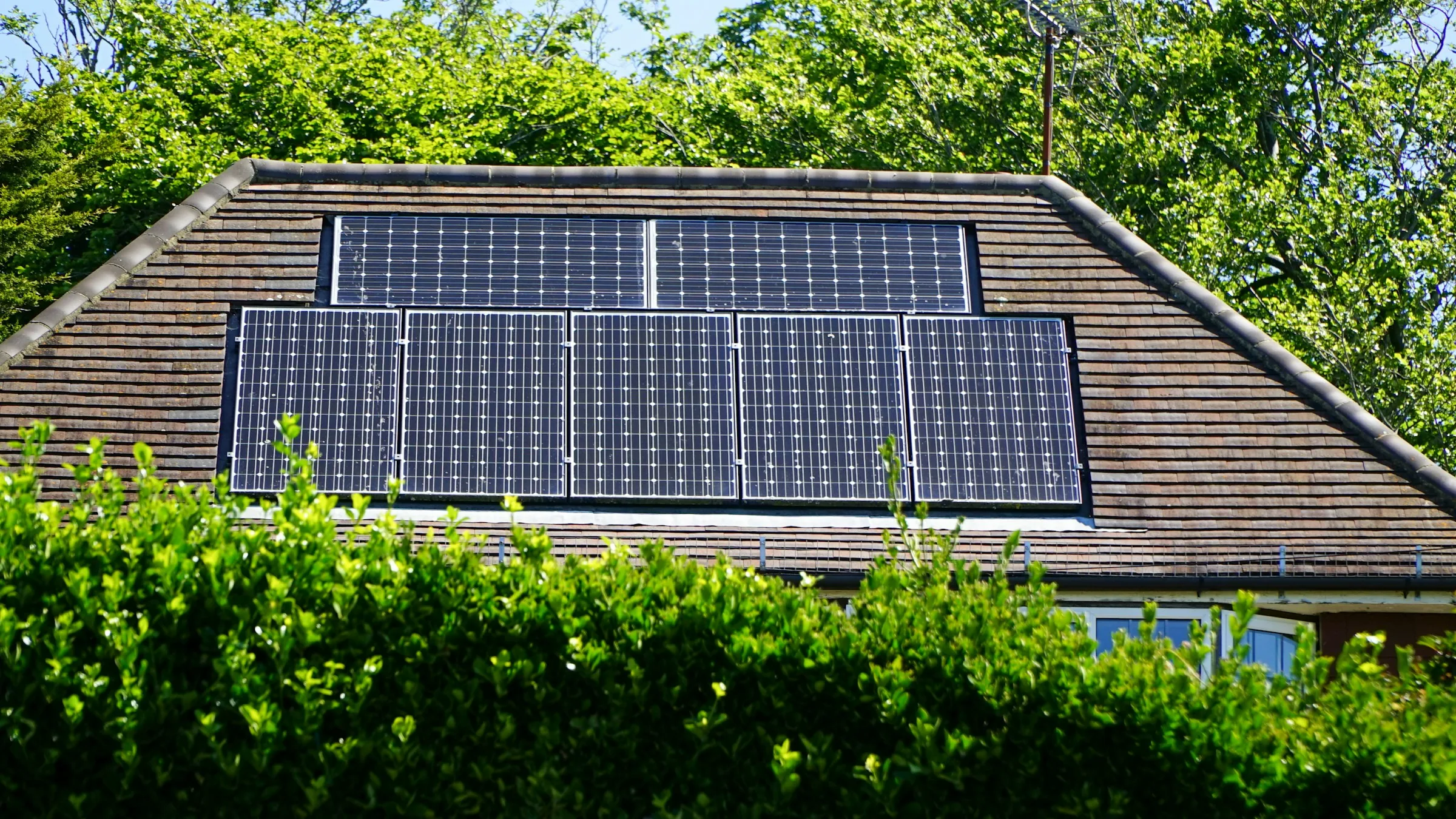
An SREC, or solar renewable energy certificate, is a credit created for every megawatt-hour (1,000 kWh) of electricity a solar system produces. The system owner can sell SRECs separately from the power itself, usually to electricity suppliers that need them to meet a state solar requirement.
The certificate represents the "green" attributes of solar power, not the electricity. Your panels still power your home or business, or feed the grid under net metering, while the SREC is sold on its own. The EPA puts it this way: the ultimate owner of the SREC owns the "solar-ness" of the power.
A 10 kW system makes about 12 SRECs a year, according to Xpansiv's managed solutions team (formerly SRECTrade). A 500 kW commercial rooftop makes roughly 600, which turns into real money in the right state.
How do SRECs work?
States with a solar carve-out in their renewable portfolio standard require electricity suppliers to buy a set number of SRECs each year. Suppliers that fall short pay a penalty called the solar alternative compliance payment (SACP). That penalty acts as a ceiling, so SREC prices usually trade below it.
The flow is simple. Your system's meter reports production to a state tracking registry, such as PJM-GATS. The registry issues one SREC per megawatt-hour. You or a broker sell the SRECs to a supplier, either on the spot market or through a multi-year contract. When supply runs short, prices rise toward the SACP. When there are too many SRECs, prices crash.

That supply and demand math is why SREC values differ so much by state. The chart below compares each state's 2026 price cap and shows how the caps step down over time.
D.C.'s solar compliance fee is 44 cents per kWh, or $440 per SREC, in 2026. Suppliers paid about $407 on average in 2025.
Sources: D.C. Code § 34-1434 and D.C. PSC 2026 RPS report; Xpansiv Managed Solutions state SREC market pages (Maryland, Delaware, Virginia); Xpansiv summary of the New Jersey BPU ADI order (2026). Caps are ceilings, not prices; market SRECs usually trade below them.
How much is an SREC worth in 2026?
It depends on the state. Washington, D.C. SRECs are worth the most, selling for an average of about $407 in 2025 under a $460 compliance fee, which falls to $440 in 2026. Maryland's 2026 cap is $45, Delaware's is $150, and New Jersey pays new residential systems a fixed $77 per certificate.
The D.C. Public Service Commission's 2026 RPS report says suppliers retired 379,947 SRECs for the 2025 compliance year, buying at an average of about $407 each. Under D.C. Code § 34-1434, the solar compliance fee falls from 46 cents per kWh in 2025 to 44 cents in 2026 and 30 cents by 2033.
Other states have much lower caps. Maryland's SACP drops from $45 in 2026 to $22.50 in 2030, Delaware's holds at $150, and Virginia's is about $78.83 in 2026, according to Xpansiv's state market pages. Pennsylvania's SACP floats at 200% of the average SREC price. Ohio eliminated its solar carve-out in 2020, which collapsed prices there.
How do New Jersey SRECs work now?
New Jersey replaced its market-traded SREC program with fixed-price SREC-IIs under the Administratively Determined Incentive (ADI) program. Residential systems registered on or after July 27, 2026, earn $77 per SREC-II for 15 years, down from $85. Commercial incentive values didn't change.
A fixed price removes the market risk that made old New Jersey SRECs swing wildly. The Board of Public Utilities cut the residential rate by about 9% while raising residential capacity to 300 MW for Energy Year 2027, Xpansiv reported. Projects registered before July 27, 2026, keep the $85 rate.
Which states have SREC markets?
Active SREC markets include Washington, D.C., Maryland, Pennsylvania, Delaware and Virginia. New Jersey and Illinois now use fixed-price incentive programs. Massachusetts closed its SREC programs and replaced them with the SMART tariff, and Ohio's SREC market lost its solar carve-out in 2020.
Maryland is worth a second look for commercial owners. The 2024 Brighter Tomorrow Act gives a 1.5x SREC multiplier to systems of 5 MW or less on a rooftop, parking canopy or brownfield, placed in service between July 1, 2024 and January 1, 2028, per Xpansiv. In Illinois, the Illinois Shines program buys 15 or 20 years of RECs at a fixed price. Massachusetts owners now get a fixed SMART payment instead.
Location rules matter. Pennsylvania SRECs must come from Pennsylvania systems, and D.C. requires systems to be in the District or on a distribution feeder serving it. Systems outside those markets can often still sell lower-priced Tier I RECs into PJM states instead. Check eligibility before you register. Use the calculator below to estimate what your system's SRECs could earn.
A 100 kW system producing 1,200 kWh per kW makes about 120 SRECs a year. At $400 each, that's $48K a year and $480K over 10 years. D.C. SRECs averaged about $407 in 2025. A 30% ITC on a $200K system adds $60K up front.
Illustrative estimate. D.C. and New Jersey defaults reflect the 2025 D.C. average purchase price and the fixed New Jersey residential ADI rate. Other states' prices are assumptions you should replace with a current broker quote; market prices change and stay below each state's cap. SREC income is generally taxable.
How do you sell SRECs?
Register your system with your state's utility commission and tracking registry, report monthly production from a revenue-grade meter, then sell the SRECs through a broker, an aggregator or a long-term contract. Many installers handle registration for you, but read the contract terms and fees carefully.
Spot sales get you the current market price, which can rise or fall. A three-to-five-year fixed contract trades some upside for predictable income, which lenders like. Brokers charge a fee per SREC or a percentage of the sale. In D.C., SRECs have a five-year life, so you don't have to sell them the year they're made.
Do SRECs affect the solar tax credit?
You can sell SRECs and still claim the federal investment tax credit (ITC) on the solar system. SREC income is a separate revenue stream. The IRS treated REC sales as taxable gross income in Private Letter Ruling 201035003, so plan for tax on SREC income.

In PLR 201035003, the IRS ruled that REC payments from a utility were not a tax-free energy conservation subsidy under Section 136 and had to be included in gross income. A private letter ruling only binds the taxpayer who requested it, so confirm your treatment with a tax advisor. For businesses, the bigger number is usually the 30% ITC under Section 48E, which commercial solar can still get if it began construction by July 4, 2026, or is placed in service by the end of 2027. That credit can be sold for cash, and SRECs add income on top of it for the life of the system. Pair the array with a battery, and a virtual power plant program can pay you a third time.
Sources
Frequently Asked Questions
Are SRECs taxable?
Generally, yes. In Private Letter Ruling 201035003, the IRS treated REC sale payments as gross income rather than a tax-free energy conservation subsidy. Private letter rulings only bind the taxpayer who requested them, so ask your tax advisor how to report SREC income.
How long do SRECs last?
Do I need a special meter to earn SRECs?
Can I sell SRECs if my installer owns the system?
Can Cenet Capital help with my solar project's credits?
Turn your solar into two income streams
Cenet Capital helps commercial solar owners value the 30% federal investment tax credit, check it against the 2026 and 2027 deadlines and sell it to corporate buyers for cash, while you keep your SREC income. Share your system size, state and timeline, and we'll show you what the credit could be worth.

More Insights


