
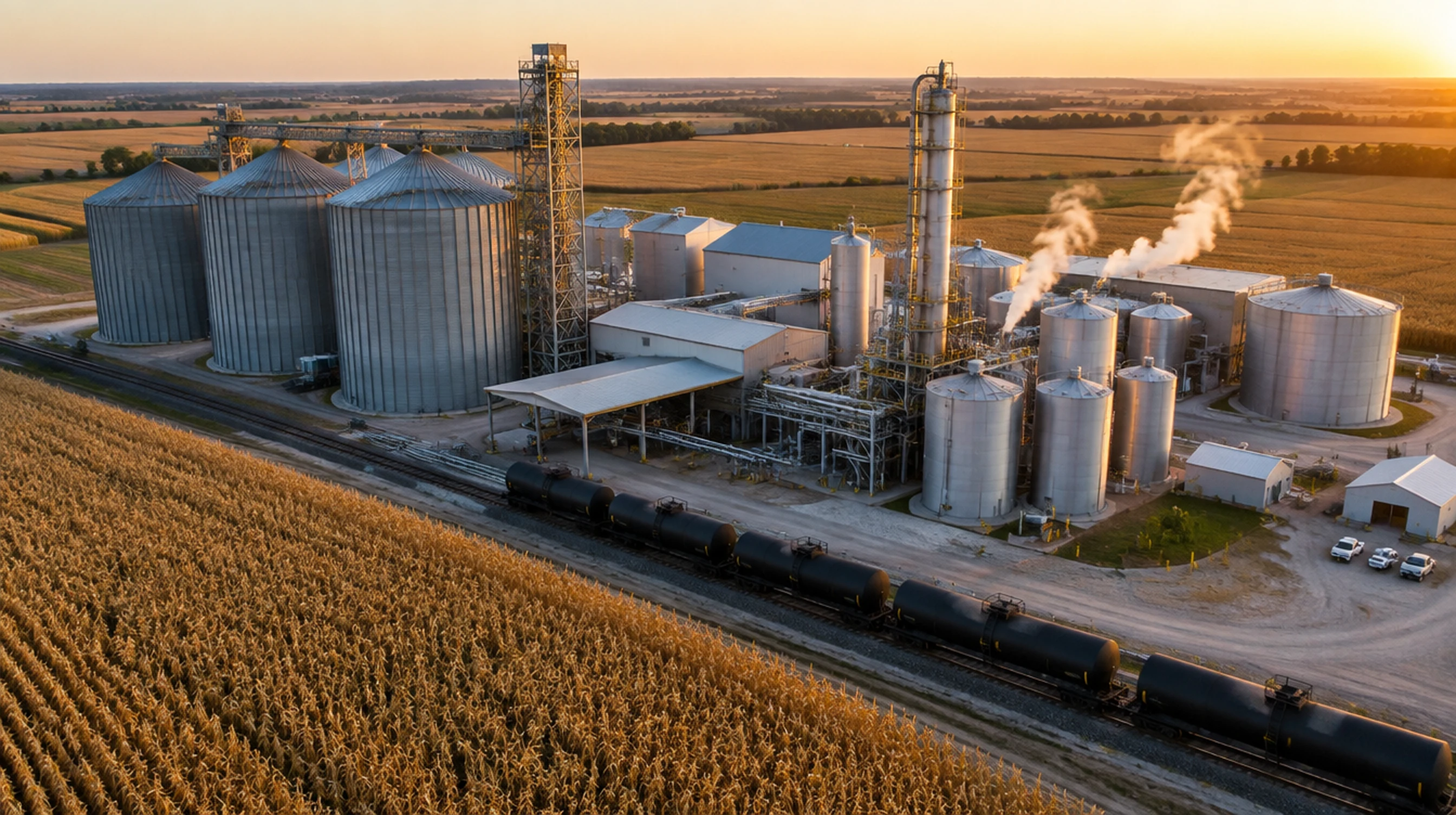
The 45Z clean fuel credit pays up to $1.00 per gallon through 2029. How it's calculated, which fuels qualify, OBBBA changes, emissions rates, and selling 45Z credits.
Author -
Paulestini Francois
Published -
READ TIME
The 45Z clean fuel production credit pays biofuel and renewable natural gas producers by the gallon, scaled by how clean their fuel is. After the One Big Beautiful Bill extended it through 2029 and Treasury released proposed rules and a 2026 emissions rate table, producers finally have a clear picture of what their fuel is worth. Here's how 45Z works in 2026: the formula, which fuels qualify, the new rules, real-world values, and how producers sell 45Z credits for cash.
What is the 45Z tax credit?
Section 45Z, the clean fuel production credit, is a federal tax credit of up to $1.00 per gallon for low-carbon transportation fuels produced in the U.S. and sold from 2025 through 2029. The cleaner the fuel, measured by its lifecycle emissions rate, the bigger the credit. It replaced the old blender’s credits for biodiesel, renewable diesel and sustainable aviation fuel with a single sliding-scale credit that rewards carbon intensity rather than fuel type. Ethanol, biodiesel, renewable diesel, renewable natural gas (RNG), sustainable aviation fuel (SAF) and other fuels can all qualify.
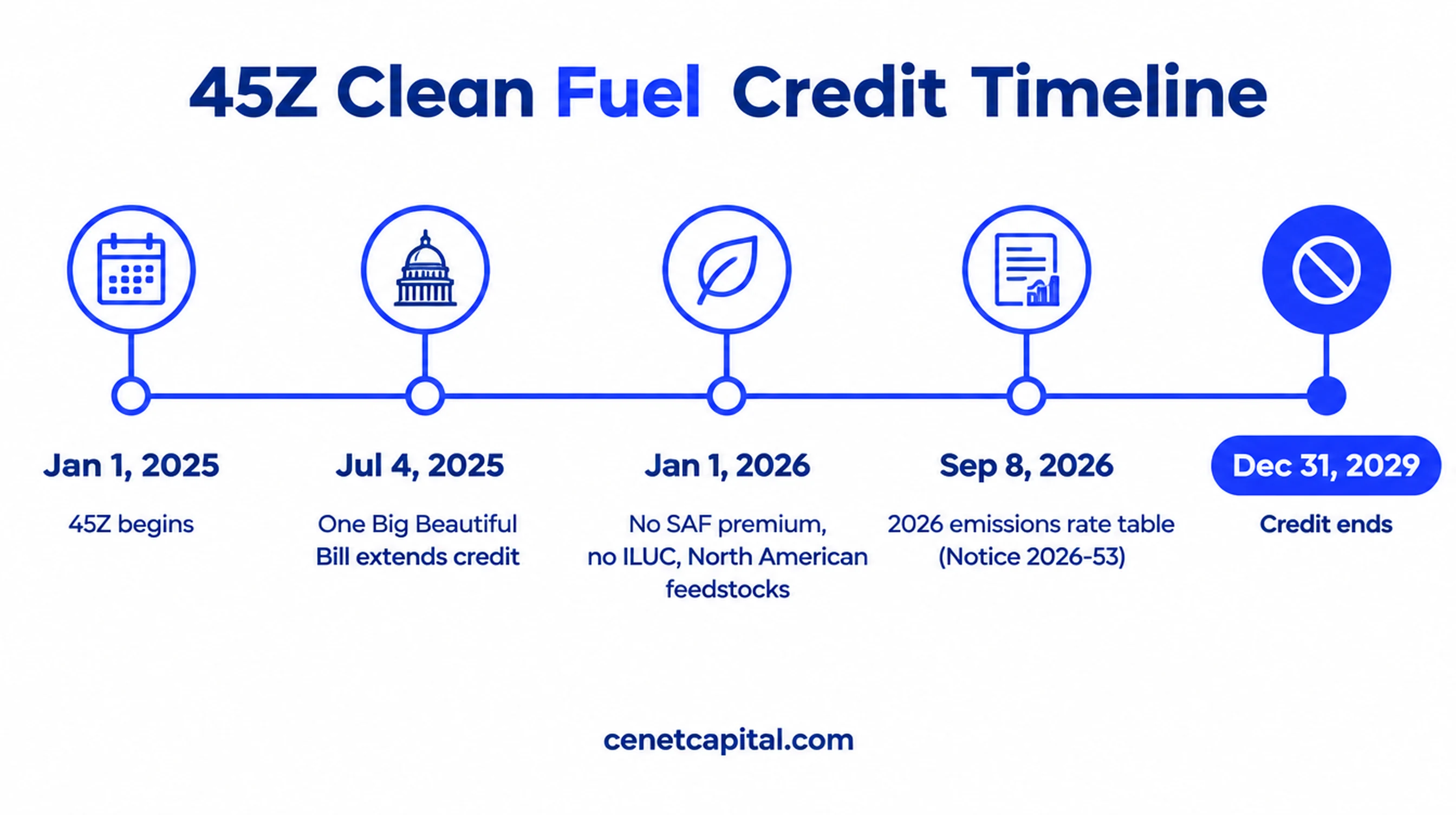
The credit was created by the Inflation Reduction Act and amended by the One Big Beautiful Bill Act in July 2025, which extended it two years and changed how emissions are counted. Treasury issued proposed regulations on February 4, 2026, and the 2026 emissions rate table in Notice 2026-53 on September 8, 2026. For a shorter primer, see our earlier post, 45Z clean fuel production credit explained.
How is the 45Z credit calculated?
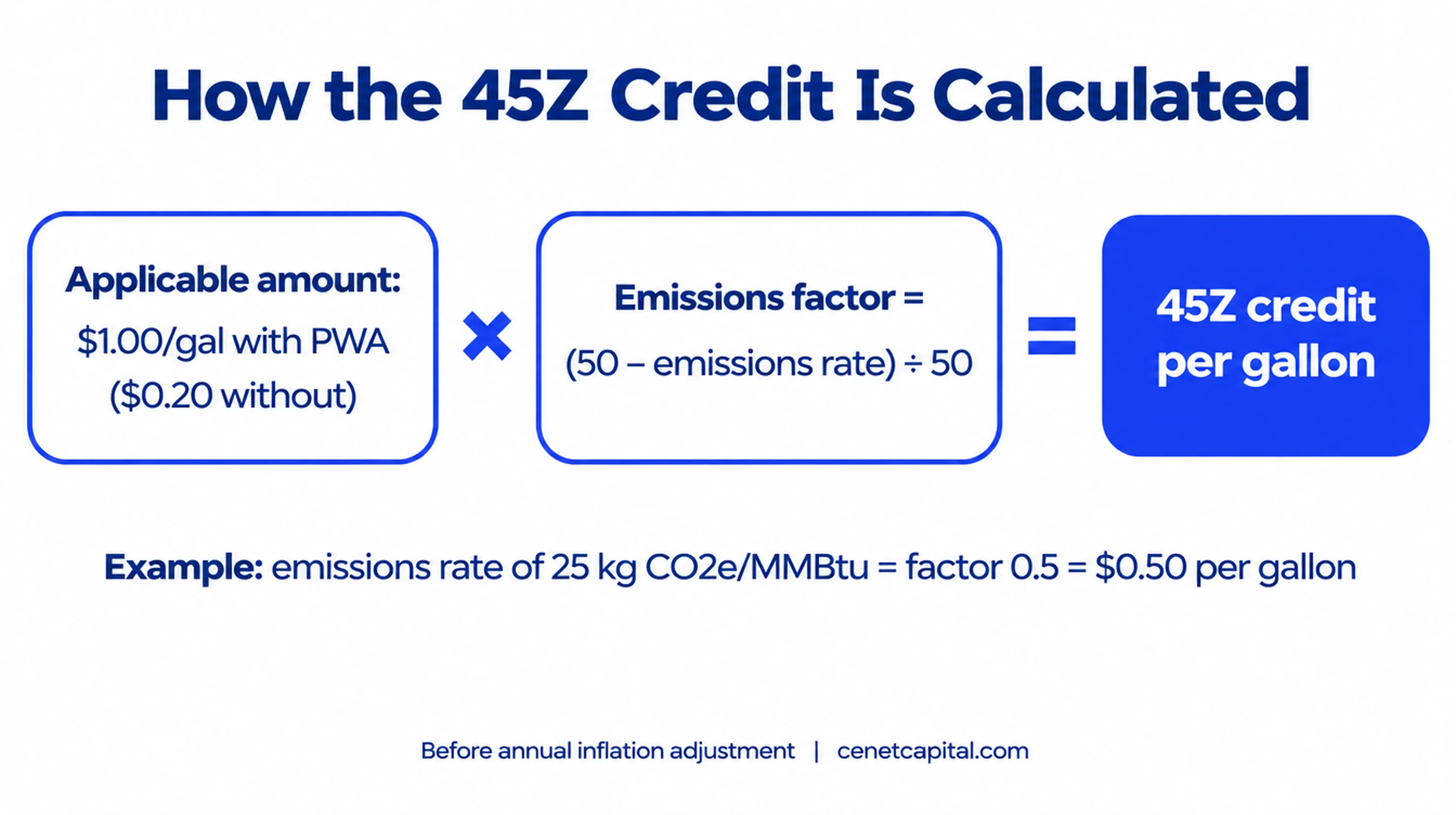
Credit per gallon = applicable amount × emissions factor. The applicable amount is $1.00 per gallon for producers meeting prevailing wage and apprenticeship requirements (20 cents otherwise), and the emissions factor equals (50 − the fuel’s emissions rate) ÷ 50, with the emissions rate in kilograms of CO2e per MMBtu. Both amounts are adjusted for inflation. A fuel at 25 kg CO2e/MMBtu has an emissions factor of 0.5 and earns 50 cents per gallon. A fuel at or above 50 kg earns nothing.
Emissions rate (kg CO2e/MMBtu) | Emissions factor | Credit per gallon (PWA met) | Credit per gallon (no PWA) |
|---|---|---|---|
50 or higher | 0 | $0.00 | $0.00 |
40 | 0.2 | $0.20 | $0.04 |
30 | 0.4 | $0.40 | $0.08 |
20 | 0.6 | $0.60 | $0.12 |
0 | 1.0 | $1.00 | $0.20 |
-50 (manure-based RNG) | 2.0 | $2.00 | $0.40 |
Amounts shown before the annual inflation adjustment. For gaseous fuels like RNG, the credit applies per gallon of gasoline equivalent. Use the calculator below to estimate your facility’s credit.
What is your fuel worth under 45Z?
Illustrative only, before the annual inflation adjustment. Emissions rates come from the 45ZCF-GREET model under the IRS emissions rate table. Default rates are examples, not industry averages. Fuel produced after 2025 must use U.S., Mexican or Canadian feedstocks.
Price your 45Z credits →What fuels qualify for 45Z?
Any transportation fuel with an emissions rate below 50 kg CO2e per MMBtu, produced at a qualified U.S. facility by a registered producer and sold to an unrelated person, can qualify. The 2026 emissions rate table covers ethanol from corn, sorghum and other feedstocks, biodiesel and renewable diesel from vegetable oils, used cooking oil and tallow, RNG from landfill gas, wastewater, food waste and animal manure, renewable propane and naphtha, SAF, and fuels made with hydrogen.
Registration. Producers must be registered with the IRS as clean fuel producers, using Form 637.
Sale to an unrelated person. Sales to distributors that resell the fuel count, under the proposed regulations.
Facility. A facility is a single production line that produces transportation fuel.
No double-dipping. A facility claiming certain other credits, such as 45V or 45Q, can’t also claim 45Z on the same production.
How do you find your fuel’s emissions rate?
Use the Treasury emissions rate table in effect on the first day of your tax year, which points most fuels to the Department of Energy’s 45ZCF-GREET model. If your fuel or pathway isn’t in the table, you can petition the IRS for a provisional emissions rate. SAF producers can use 45ZCF-GREET or the international CORSIA methodology.
The model counts emissions from feedstock production through fuel use. Feedstock farming typically accounts for 40% to 60% of a crop-based biofuel’s lifecycle carbon intensity, so climate-smart practices on the farm, documented with USDA’s 45Z feedstock carbon intensity calculator, can measurably raise the credit. Notice 2026-53 also lets producers of fuel from dairy and swine manure use farm-specific prior manure management practices, which can produce negative emissions rates and credits above $1.00 per gallon.
What did the One Big Beautiful Bill change for 45Z?
It extended the credit through 2029 and made four changes for fuel produced after 2025: indirect land use change no longer counts in emissions rates, feedstocks must come from the U.S., Mexico or Canada, the higher rate for SAF is gone, and manure-based fuels get feedstock-specific (and potentially negative) emissions rates.
Rule | Before OBBBA | Fuel produced after 2025 |
|---|---|---|
Last year of credit | 2027 | 2029 |
SAF applicable amount | Up to $1.75/gal | Same as other fuels: up to $1.00/gal |
Indirect land use change | Included | Excluded |
Feedstock origin | Any | U.S., Mexico or Canada |
Animal manure | Generic rate | Distinct rates by manure type; can be negative |
Transfer to specified foreign entity | Allowed | Prohibited |
Excluding indirect land use change was the biggest win for crop-based fuels like corn ethanol and soybean biodiesel, because it removes a large emissions penalty from their scores. The North American feedstock rule, by contrast, hurts producers relying on imported used cooking oil and tallow from elsewhere. The full list of changes to every credit is in our One Big Beautiful Bill guide.
How much is a 45Z credit worth to a real facility?
For a 100-million-gallon-a-year ethanol plant with an emissions factor of 0.2, the credit is about 20 cents per gallon, or roughly $20 million a year, with prevailing wage and apprenticeship met. A renewable diesel plant at a factor of 0.4 producing 200 million gallons would earn about $80 million. Crux reported renewable diesel producers earning roughly 30 to 40 cents per gallon and RNG producers $4 to $8 per MMBtu in early 2026, according to its Q1 2026 market update.
The economics are stacked: 45Z sits on top of Renewable Fuel Standard RINs and state low-carbon fuel standard credits, which reward the same carbon reductions. A producer that cuts its emissions rate earns more under all three at once.
How does 45Z compare with the old biofuel credits?
45Z replaced a set of fixed-rate credits with one performance-based credit. The old $1.00-per-gallon biodiesel and renewable diesel blenders’ credit paid the same regardless of carbon intensity; 45Z pays more for cleaner fuel and nothing for fuel at or above 50 kg CO2e per MMBtu. It’s also a producer credit rather than a blender credit, which moved the benefit upstream to the plants that make the fuel.
Old blenders’ credits (through 2024) | 45Z (2025–2029) | |
|---|---|---|
Who claims | Blenders | Fuel producers |
Amount | Fixed per gallon | Sliding scale by emissions rate |
Ethanol | No federal per-gallon credit | Eligible if below 50 kg CO2e/MMBtu |
Imported fuel | Often eligible | Must be produced in the U.S.; feedstocks from North America after 2025 |
Transferable | No | Yes |
For ethanol producers in particular, 45Z is new money: corn ethanol had no comparable federal per-gallon credit, so plants that cut their carbon intensity through carbon capture, renewable process energy or low-carbon corn can now earn a meaningful credit on every gallon.
Can you sell 45Z credits?
Yes. 45Z credits are transferable under Section 6418 and have become one of the fastest-growing parts of the transfer market, with about $1.7 billion of transactions in the first half of 2026 compared with $1.1 billion in all of 2025, according to Crux. They typically price around 85 to 93 cents per dollar, a few cents below solar and wind credits, because buyers take on more risk around emissions scores and the regulations aren’t final.
Buyers focus on three things: how the emissions rate was determined and verified, how much headroom the fuel has before its score would drop a credit bracket, and the producer’s financial strength. Most producers sell credits quarterly or annually as fuel is sold. Selling ahead, with credits delivered as production occurs, lets a producer lock in cash flow before year-end. Credits can’t be sold to a specified foreign entity.
45Z checklist for producers
Register with the IRS as a clean fuel producer (Form 637) before claiming.
Run your emissions rate in the current 45ZCF-GREET model, and keep the inputs.
Document feedstock origin (U.S., Mexico or Canada) for fuel produced after 2025.
Track prevailing wages and apprentices for construction and alteration work, or you’ll earn one-fifth of the credit.
Keep sale records showing fuel went to unrelated buyers.
Get independent verification ready for credit buyers and their insurers.
If you produce clean fuel and would rather have cash than a credit, Cenet Capital buys and insures 45Z credits. Run your numbers in the calculator above and send them over for pricing.
Producing clean fuel? Turn your 45Z credits into cash.
Cenet Capital buys and insures 45Z clean fuel credits from ethanol, biodiesel, renewable diesel, SAF and RNG producers. Send us your volumes and emissions rate for pricing.

More Insights