
Credit Guides
Methane pyrolysis splits natural gas into hydrogen and solid carbon with no CO2. How it works, who's building it, what the carbon is worth, and the 45V path.
Author -
Paulestini Francois
Published -
READ TIME
What if you could make hydrogen from natural gas without making CO2? That's the promise of methane pyrolysis, which leaves the carbon behind as a solid you can sell. Here's how it works, who's building it, what happens to all that carbon, and the extra step a pyrolysis plant needs to earn the 45V tax credit.
QUICK ANSWER
Methane pyrolysis heats natural gas without oxygen until it splits into hydrogen and solid carbon, so the reactor emits no CO2. Each kg of hydrogen takes about 4 kg of methane and 7 to 12 kWh of energy, and leaves 3 kg of carbon. It can earn the 45V credit, but only after getting a provisional emissions rate.
KEY FACTS
What is turquoise hydrogen? Hydrogen made by methane pyrolysis, named for its place between blue and green hydrogen.
What is methane cracking? Another name for methane pyrolysis: breaking methane into hydrogen and carbon with heat.
How much carbon black does methane pyrolysis make? About 3 kg of solid carbon per kg of hydrogen, sold as carbon black or graphite, or disposed of if low grade.
Is methane pyrolysis hydrogen clean? At the reactor, yes. Its lifecycle rate depends on upstream methane leaks and the power used for heat.
What is a provisional emissions rate? An IRS-approved 45V emissions rate for a pathway the 45VH2-GREET model doesn't cover, based on a DOE emissions value.
Does the 45V PTC cover methane pyrolysis hydrogen production? Yes, if lifecycle emissions are 4 kg CO2e per kg or less and construction begins before 2028.
What is methane pyrolysis?
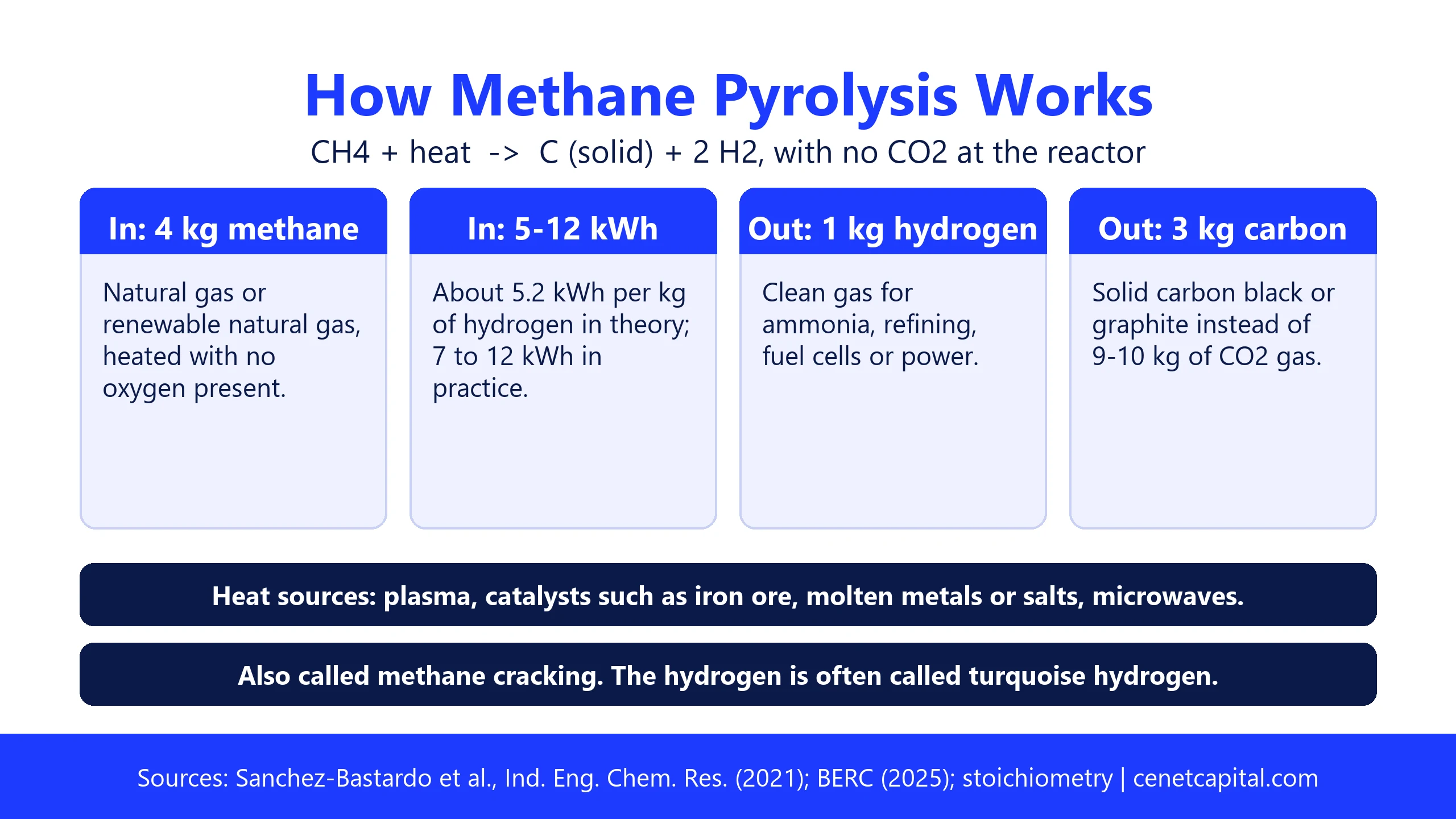
Methane pyrolysis is a way to make hydrogen by heating natural gas, which is mostly methane, in the absence of oxygen until it splits into hydrogen gas and solid carbon. Because the carbon comes out as a solid instead of CO2, the reactor itself emits no carbon dioxide. The hydrogen it makes is often called turquoise hydrogen.
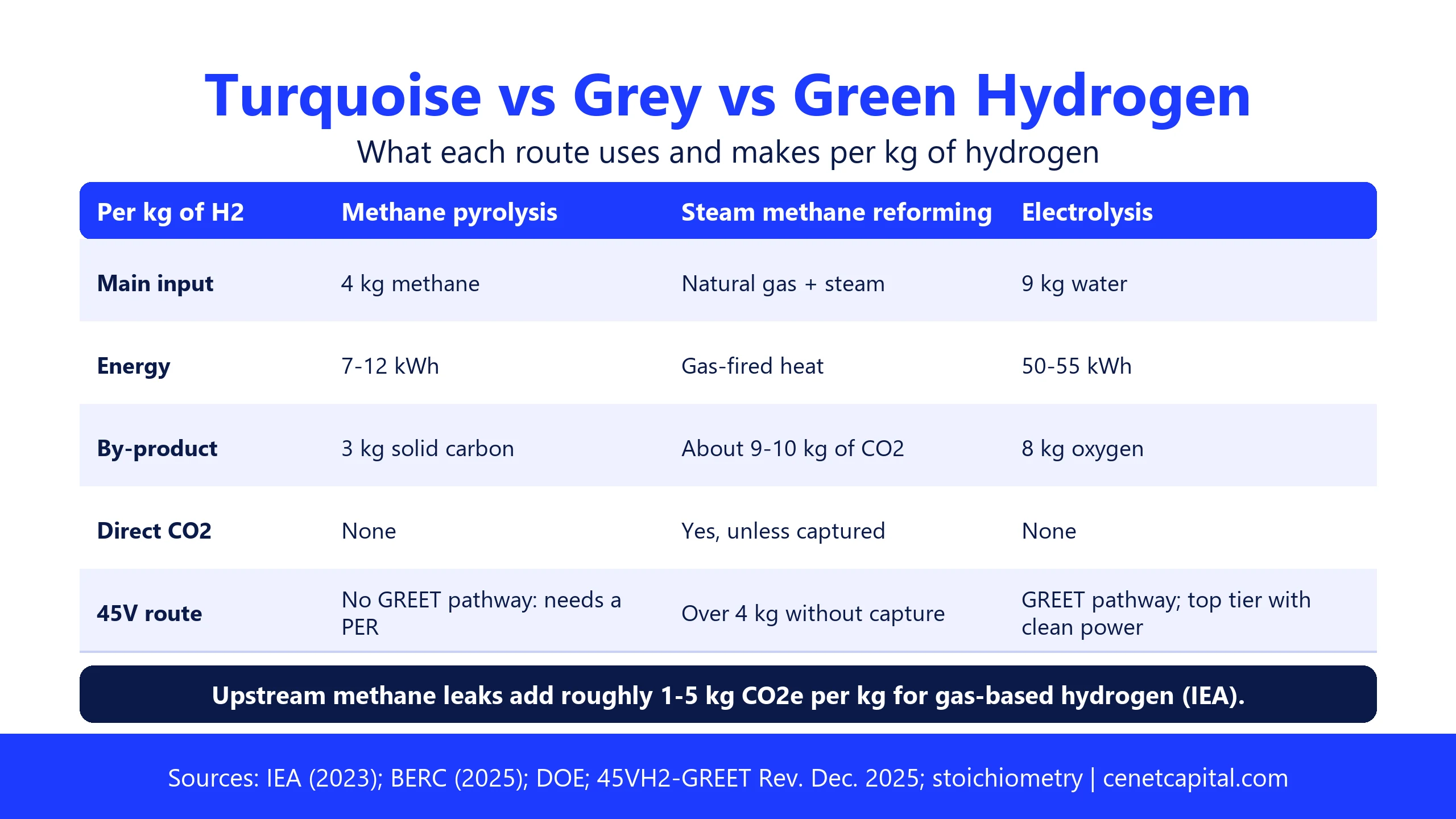
The chemistry fits in one line: CH4 + heat → C + 2H2. It’s also called methane cracking or methane decomposition. Compare that with steam methane reforming, the route behind most hydrogen today, which reacts methane with steam and releases roughly 10 kg of CO2 for every kilogram of hydrogen, according to the Berkeley Energy & Resources Collaborative.
Methane pyrolysis keeps the low-cost natural gas supply chain but trades the CO2 problem for a solid carbon product that can be sold, stored or buried. That’s why investors, gas utilities and the Department of Energy have funded it as a bridge between grey and green hydrogen.
How does methane pyrolysis work?
A reactor heats methane until its bonds break, using plasma, a catalyst, molten metal or salt, or microwaves. Each kilogram of hydrogen takes 4 kg of methane and leaves 3 kg of solid carbon. The reaction needs about 5.2 kWh per kg of hydrogen in theory and 7 to 12 kWh in practice.
The reaction absorbs 74.8 kJ per mole of methane, or 37.4 kJ per mole of hydrogen, which is why the theoretical energy need is so low. Without a catalyst, methane needs temperatures above about 1,000°C to split quickly; catalysts and molten metals bring that down and help separate the carbon. A 2021 review in Industrial & Engineering Chemistry Research compares the main reactor designs.
The energy advantage over water electrolysis is large. BERC puts methane pyrolysis at 75% to 90% less energy than electrolysis, which takes roughly 50 to 55 kWh per kg, as our hydrogen electrolyzer guide explains. The trade-off is feedstock: pyrolysis uses more natural gas per kilogram of hydrogen than reforming, because the carbon’s energy is locked in the solid rather than burned.
What is turquoise hydrogen?
Turquoise hydrogen is hydrogen made by methane pyrolysis. The color signals its place between blue hydrogen, made from natural gas with the CO2 captured and stored, and green hydrogen, made by electrolysis on renewable power. Turquoise hydrogen avoids making CO2 gas at all, so there’s nothing to capture or pipe away.
The color labels are informal, and the federal tax credit ignores them. Our guide to the colors of hydrogen explains how green, blue, grey, pink, white and turquoise compare. What counts for the 45V credit is the lifecycle emissions rate, measured from the gas well to the plant gate.
For turquoise hydrogen, that well-to-gate number is driven by two things the reactor doesn’t control: methane that leaks during gas production and transport, and the emissions of the electricity used to heat the reactor. A plant can emit zero CO2 at the site and still miss the 45V threshold.
Who is commercializing methane pyrolysis?
Monolith runs the largest U.S. plant, at Olive Creek near Hallam, Nebraska, where plasma pyrolysis turns natural gas into carbon black and hydrogen. Australia’s Hazer Group uses an iron ore catalyst and finished a commercial plant design with KBR in 2026. Other startups are developing microwave, molten-metal and modular designs.
The Department of Energy’s Loan Programs Office offered Monolith a conditional commitment of up to $1.04 billion to expand Olive Creek, with plans to turn its hydrogen into ammonia. Monolith has since changed course. In fall 2026, the Hallam Village Board approved a 35-megawatt data center on the site with Crusoe, alongside more carbon black capacity, in place of the ammonia plant.
Hazer and KBR completed a process design package in April 2026 for a 30,000-tonne-a-year hydrogen plant with graphite production. That plant would also make roughly 90,000 tonnes of carbon a year, which shows why the carbon market matters as much as the hydrogen.
What happens to the carbon from methane pyrolysis?
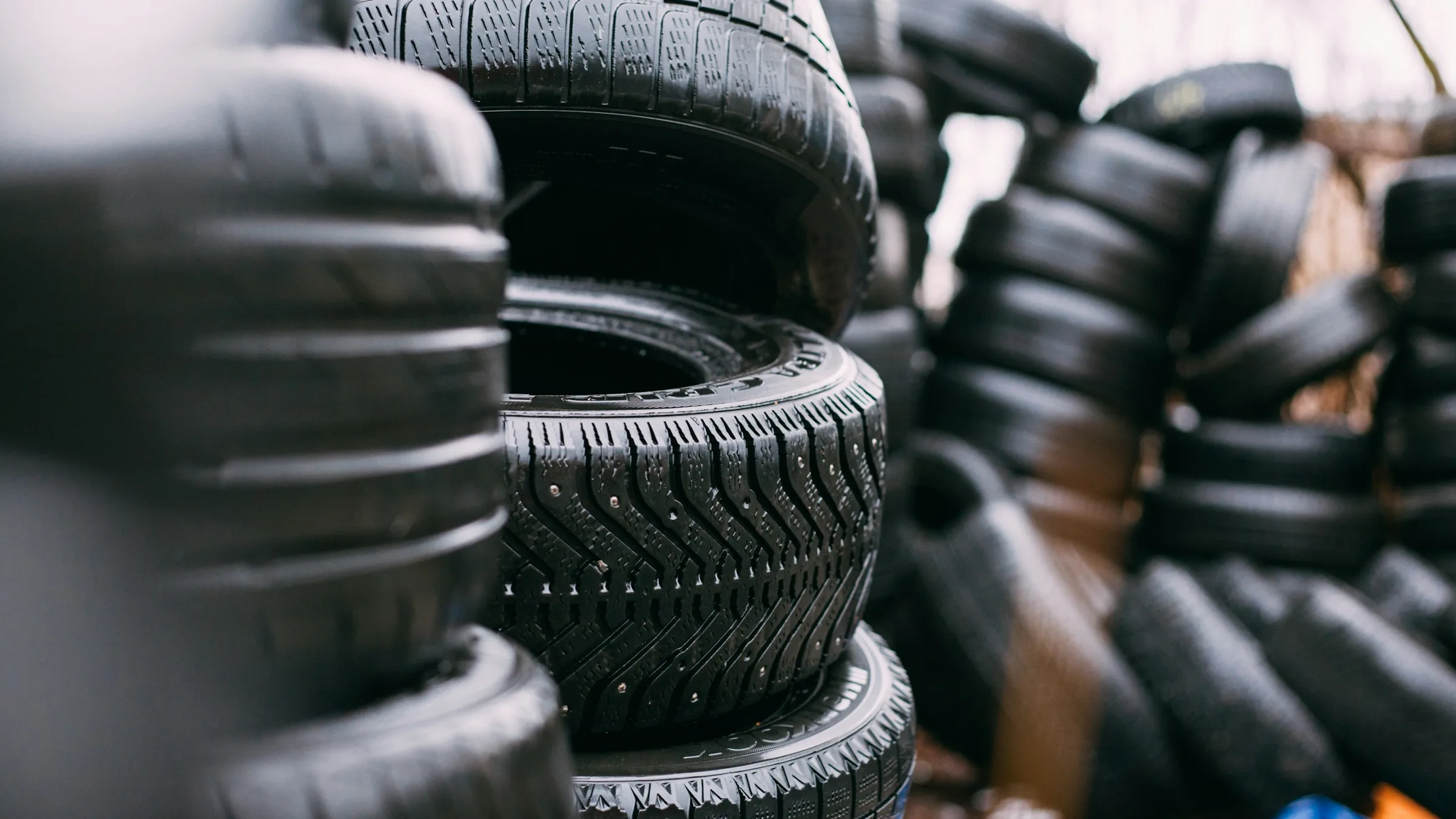
The solid carbon is sold or stored. High-quality carbon black goes into tires, rubber, inks and coatings, and graphite can go into batteries and electrodes. Lower-grade carbon may only be worth landfilling. Because every kilogram of hydrogen comes with 3 kg of carbon, the carbon price can make or break the project.
BERC notes the tension: running a reactor fast makes more hydrogen but lower-grade, amorphous carbon with little market value, while slower processes can make higher-value graphite or nanotubes. Selling carbon at a few hundred dollars a tonne cuts the cost of hydrogen by roughly $1 per kg. Paying to dispose of it adds cost instead.
Scale is the risk. The carbon black market is far smaller than the amount of carbon a large hydrogen industry would produce, so early plants will compete for premium buyers such as tire makers. Monolith’s carbon black has already gone into Goodyear tires.
Does methane pyrolysis qualify for the 45V tax credit?
It can, but there’s no ready-made path. The 45V clean hydrogen production tax credit (PTC) uses the 45VH2-GREET model, which has no methane pyrolysis pathway. A pyrolysis producer needs a provisional emissions rate from the IRS, based on an emissions value from the Department of Energy. The facility must also begin construction before 2028.
The December 2025 version of 45VH2-GREET covers nine processes, including reforming, gasification and electrolysis, but not pyrolysis. Under section 45V, hydrogen with lifecycle emissions under 0.45 kg of CO2e per kg earns the full credit, up to $3.28 per kg in 2026 with prevailing wage. Credits fall to 33.4%, 25% and 20% at higher tiers, and nothing above 4 kg.
Electricity can sink a pyrolysis plant. At 10 kWh per kg on average U.S. grid power, which the EIA puts at about 0.366 kg of CO2 per kWh, power alone adds 3.7 kg of CO2e per kg of hydrogen. Clean power backed by qualifying energy attribute certificates counts as zero.
How do you get a provisional emissions rate for methane pyrolysis?
First, finish a front-end engineering and design (FEED) study at an AACE Class 3 cost estimate. Then email DOE to request an emissions value, upload the FEED sections and a request form, and wait for DOE’s lifecycle analysis. Finally, use DOE’s emissions value to petition the IRS for a provisional emissions rate.
The DOE 45V Emissions Value Request page says DOE won’t review applications for technologies and feedstocks already in 45VH2-GREET, or incomplete ones, and it currently accepts only a Class 3 FEED study as proof of project maturity. Applicants start by emailing 45VEmissionsRequest@ee.doe.gov with the subject line “Intent to Submit Emissions Value Request Application.”
Methane leakage is the number to watch. The IEA’s hydrogen emissions report found that upstream and midstream emissions add 1 to 5 kg of CO2e per kg of grey hydrogen, and pyrolysis uses even more gas per kilogram. The Clean Air Task Force argues that 45V’s fixed national-average methane leak rate understates real leakage. Use the estimator below to test your plant.
Where would your pyrolysis plant land on 45V?
Screen your emissions rate and cost per kg. A real 45V claim needs a provisional emissions rate, because 45VH2-GREET has no pyrolysis pathway.Upstream methane accounts for 100% of the emissions rate. Each tier line you cross changes the credit by $0.16 to $2.19 per kg.
Illustrative screen only. Your actual rate comes from a DOE emissions value and an IRS provisional emissions rate. Construction must begin before 2028.
Value my turquoise hydrogen →Is turquoise hydrogen a good investment for tax credit buyers?
It can be, once a provisional emissions rate is in hand. A pyrolysis plant with clean power and low-leak gas could land in the 25% or 33.4% tier, earning $0.82 to $1.10 per kg for 10 years. Until DOE and the IRS confirm the rate, buyers will price in that uncertainty or require insurance.
45V credits are transferable, so a producer can sell them for cash to corporate tax buyers instead of waiting to use them. Buyers will ask for the DOE emissions value letter, the third-party verification report and evidence of the gas supply’s methane intensity. Tax credit insurance can cover the risk of a later disallowance.
The 2028 construction deadline is the bigger constraint. A Class 3 FEED study, DOE review and construction start all have to happen in about 14 months. Producers planning to sell 45V credits should line up buyers and the emissions value request in parallel.
Sources
Sánchez-Bastardo, N., Schlögl, R. and Ruland, H., Methane Pyrolysis for Zero-Emission Hydrogen Production, Industrial & Engineering Chemistry Research (2021)
Berkeley Energy & Resources Collaborative, Methane pyrolysis: An alternative for producing low-emission hydrogen feedstock? (August 2025)
U.S. Department of Energy, 45V Emissions Value Request
Legal Information Institute, 26 U.S. Code 45V
POWER Magazine, DOE’s First $1B Loan Guarantee in Years Seeks to Bolster Turquoise Hydrogen Process
Nebraska Public Media, Hallam Village Board unanimously approves Monolith data center
Process Online, Hazer and KBR complete commercial-scale hydrogen plant design (April 16, 2026)
International Energy Agency, Towards hydrogen definitions based on their emissions intensity (2023)
Clean Air Task Force, Fixed upstream emission rates undermine climate benefits of the 45V tax credit
U.S. Energy Information Administration, Carbon dioxide emissions per kWh of U.S. electricity
Frequently Asked Questions
What is methane pyrolysis used for?
Methane pyrolysis makes hydrogen and solid carbon from natural gas. The hydrogen can supply ammonia plants, refineries, fuel cells or power generation, and the carbon is sold as carbon black for tires and coatings or as graphite for batteries and electrodes.
Is methane pyrolysis better than electrolysis?
Is turquoise hydrogen better than blue hydrogen?
Can methane pyrolysis get the 45V tax credit?
Can Cenet Capital help with turquoise hydrogen tax credits?
Turning natural gas into turquoise hydrogen?
Cenet Capital helps hydrogen producers estimate their 45V tier, plan the emissions value request and sell credits to corporate tax buyers. Tell us your process, gas and power source.

More Insights