

Credit Guides
What gasification is, how gasifiers turn coal, biomass and waste into syngas, what gasification hydrogen costs, and how 45V, 45Q and 45Z apply to projects.
Author -
Paulestini Francois
Published -
READ TIME
Gasification turns coal, biomass and waste into syngas, a building block for hydrogen and clean fuels. Here's how it works, what it costs, and which Production Tax Credit (PTC) fits: the 45V clean hydrogen credit, the 45Q carbon capture credit or the 45Z clean fuel credit.
QUICK ANSWER
Gasification converts coal, biomass or waste into syngas, a mix of hydrogen, carbon monoxide, carbon dioxide and methane, by heating it to 700°C or more with limited oxygen or steam. The syngas becomes hydrogen, fuels, chemicals or power, and projects can earn the 45V, 45Q or 45Z credit.
KEY FACTS
What is syngas? A gas made mostly of hydrogen and carbon monoxide, plus CO2 and methane, produced by gasification.
Gasification vs pyrolysis? Pyrolysis heats material without oxygen and makes char and oil; gasification adds limited oxygen or steam and makes mostly gas.
What is biomass gasification? Gasification of wood, crop residues or other plant material; DOE modeled 155 tonnes of hydrogen a day from 2,000 dry tonnes of biomass.
What is coal gasification? Gasifying coal to make syngas; NETL put coal gasification hydrogen at $2.58 per kg without capture (2018$).
What is plasma gasification? A gasifier design that uses an electric plasma torch for very high heat; Penn State lists it among the main gasifier types.
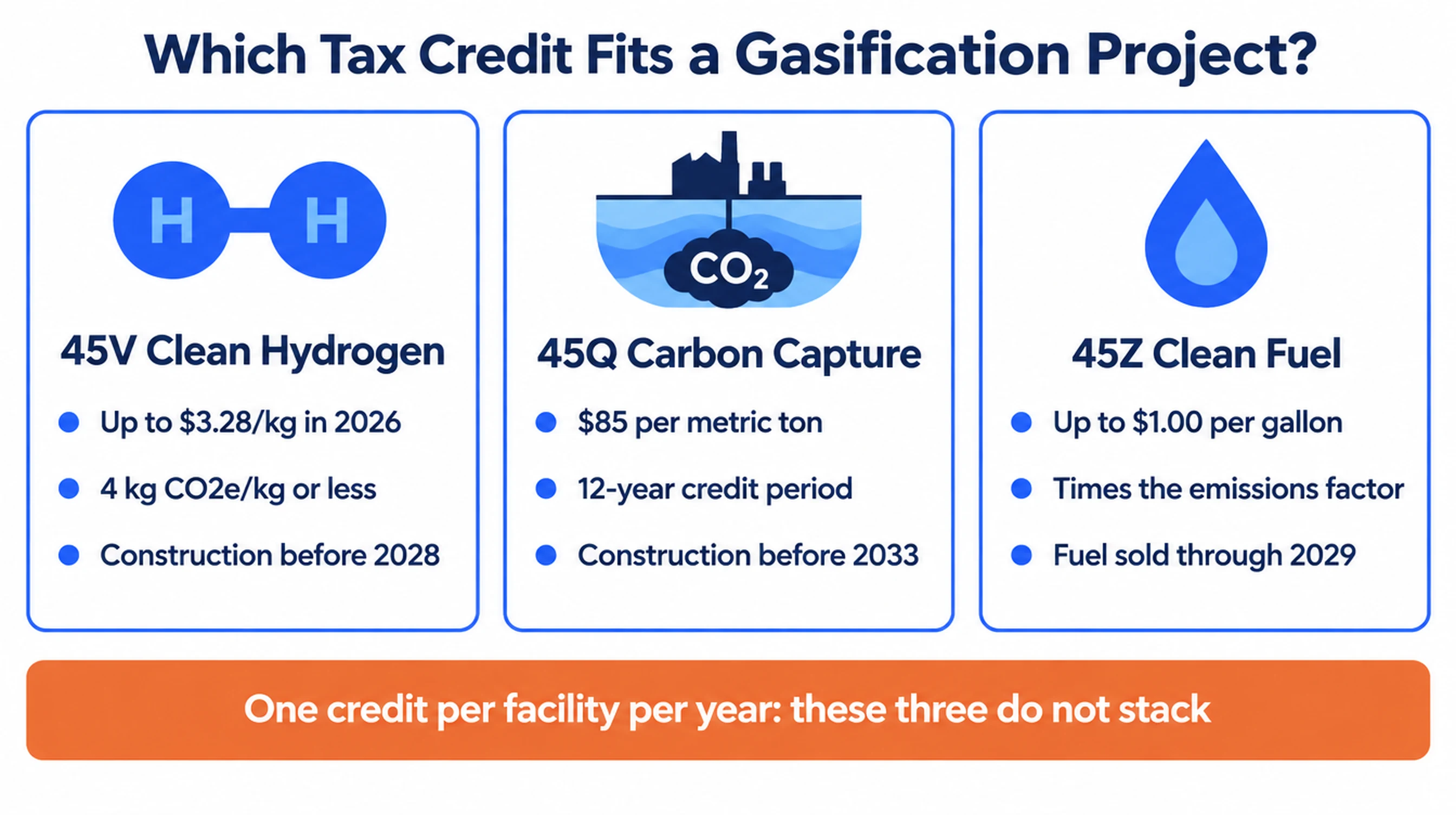
Can gasification claim the 45V PTC and 45Q PTC together? No. A facility can claim one or the other, and 45Z is also off the table in any year either is claimed.
What is gasification?
Gasification is a process that turns coal, biomass or waste into a fuel gas called syngas by heating it to 700°C or more with a limited amount of oxygen or steam. Unlike burning, it doesn’t fully combust the material. It breaks it into hydrogen, carbon monoxide, carbon dioxide and methane.
The Department of Energy describes gasification as converting “organic or fossil-based carbonaceous materials at high temperatures (>700°C), without combustion.” That syngas can be burned for power, cleaned into pure hydrogen, or rebuilt into methanol, ammonia and synthetic fuels.
It’s an old technology. Coal gas lit London streets in 1807, and gasification plus Fischer-Tropsch synthesis made liquid fuels in World War II, as Penn State’s EGEE 439 course notes. What’s new is the tax code: gasification now sits at the center of the 45V, 45Q and 45Z credits.
How does gasification work?
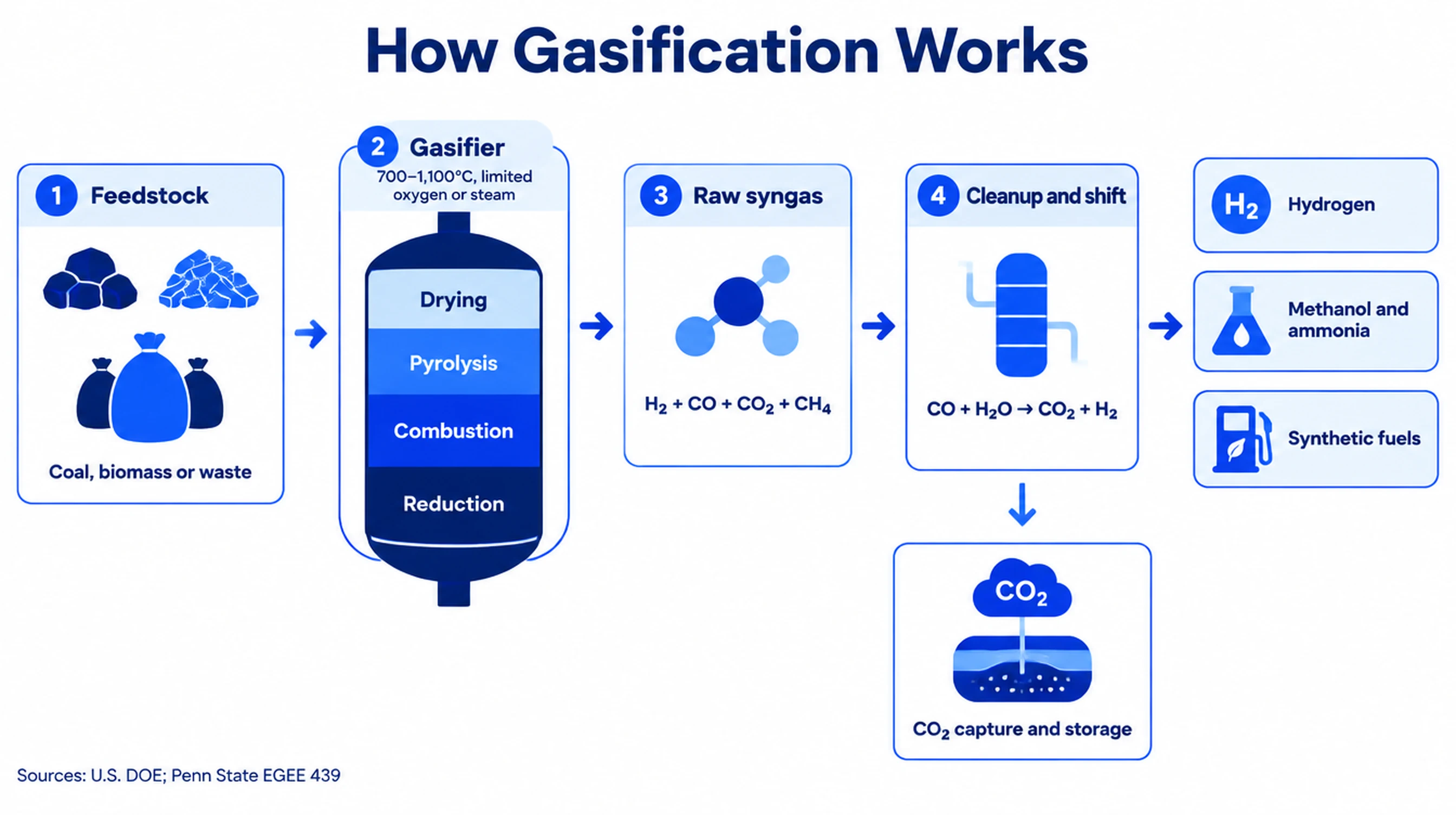
Feedstock enters a sealed gasifier and passes through four zones: drying, pyrolysis, combustion and reduction. A small share burns to supply heat, typically 750°C to 1,100°C, while the rest reacts with steam or carbon dioxide to form syngas. The gas is then cleaned and, for hydrogen, run through a water-gas shift reactor.
Drying drives off moisture. Pyrolysis releases volatile gases, tar and char. Combustion of part of the char and tar supplies heat, because gasification overall is endothermic. In the reduction zone, char reacts with steam and CO2 to make carbon monoxide and hydrogen.
To maximize hydrogen, plants add a water-gas shift step, CO + H2O → CO2 + H2, which turns carbon monoxide into more hydrogen and a concentrated stream of CO2. That pure CO2 stream is why gasification pairs well with carbon capture.
What is syngas used for?
Syngas, a mix of hydrogen and carbon monoxide, is used to make hydrogen, ammonia fertilizer, methanol, synthetic natural gas, and liquid fuels like diesel and jet fuel through Fischer-Tropsch synthesis. It can also be burned in turbines or engines to generate electricity.
The longest-running U.S. example is the Great Plains Synfuels Plant in Beulah, North Dakota. Its 14 gasifiers take in 18,000 tons of lignite a day at 2,200°F, and the plant converts the syngas to pipeline gas with a heating value of 975 Btu per cubic foot, according to Dakota Gasification Company.
For clean fuels, syngas is the bridge to e-fuels and renewable diesel made from waste, and to renewable natural gas made by methanation.
What is the difference between gasification and pyrolysis?
Pyrolysis heats material with no oxygen and produces mostly char, tar and oil. Gasification adds a controlled amount of oxygen or steam and runs hotter, so it converts most of the carbon into gas. Incineration uses excess air and burns everything for heat.
Pyrolysis is actually one step inside a gasifier. Run on its own with natural gas as the feedstock, it becomes methane pyrolysis, which splits methane into hydrogen and solid carbon without making CO2.
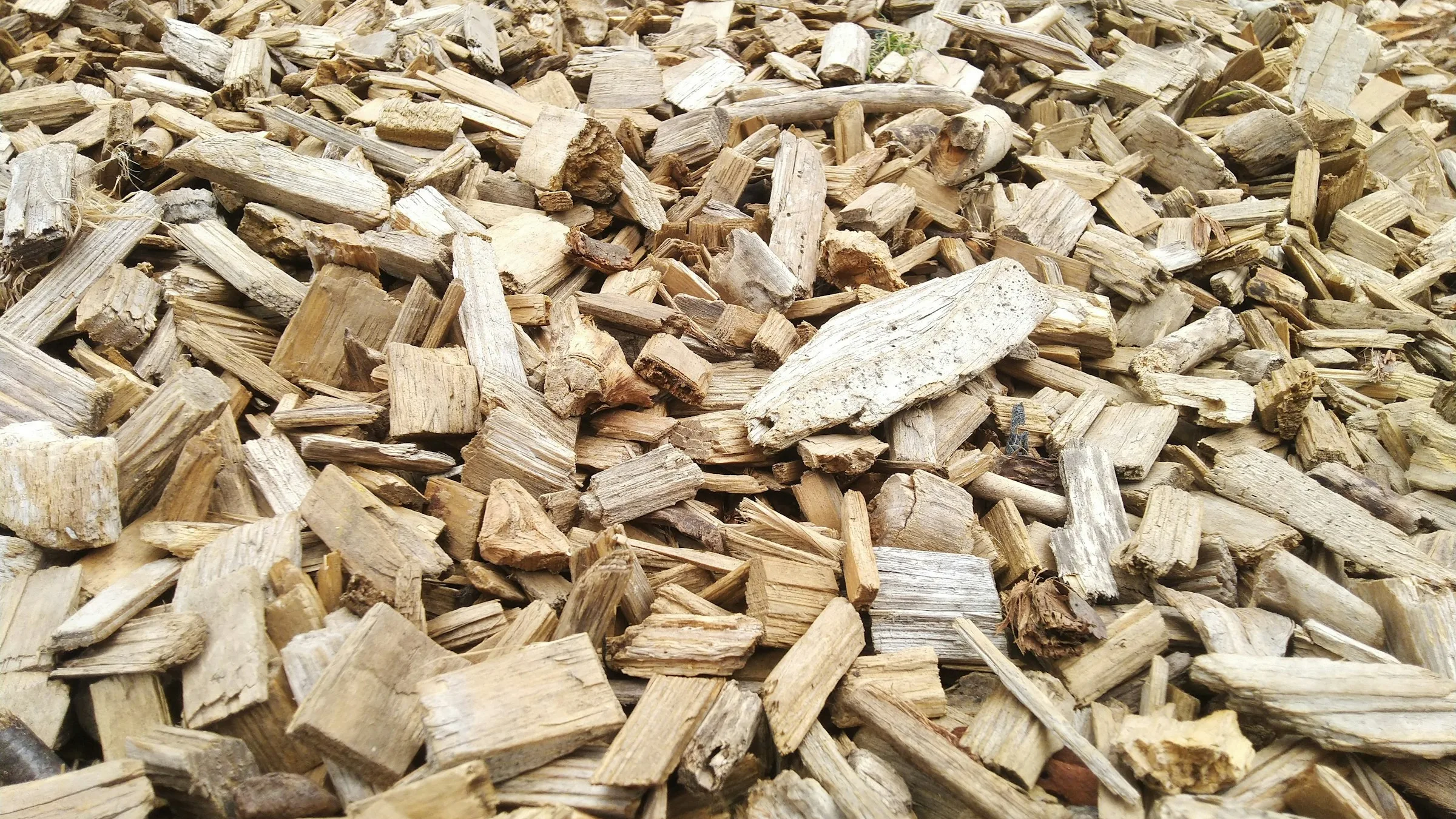
Gasifier designs differ in how feedstock and gas flow. Penn State lists updraft, downdraft, crossdraft, fluidized bed and plasma designs. Updraft units are simple but make lots of tar. Fluidized beds handle varied fuels and respond quickly, at a higher capital cost. NETL’s coal hydrogen cases use a Shell entrained-flow gasifier.
How much does hydrogen from gasification cost?
Gasification hydrogen costs about twice as much as hydrogen from natural gas. NETL put coal gasification at $2.58 per kg without capture and $3.09 with it, and coal-biomass co-gasification at $3.64, versus $1.06 for steam methane reforming (2018 dollars). Capital is the biggest cost.
Those figures come from NETL’s 2022 comparison of fossil hydrogen technologies. Capital makes up 40% to 46% of gasification cost, and coal is cheap, so adding carbon capture raised coal gasification cost only 20%, compared with 54% for steam methane reforming.
For pure biomass, DOE’s H2A analysis modeled a 2,000-dry-ton-per-day plant producing 155 metric tons of hydrogen a day at about $2.00 to $2.20 per kg, in 2007 dollars. The chart below compares NETL’s six plants on cost and emissions, before and after credits. Our LCOH guide explains the math.
Gasification plants cost about twice as much per kilogram as reformers, mostly because of capital: NETL puts capital at 40% to 46% of gasification LCOH.
Source: NETL, "Comparison of Commercial, State-of-the-Art, Fossil-Based Hydrogen Production Technologies" (DOE/NETL-2022/3241, April 2022), Exhibits ES-4 and ES-5 and case carbon balances. NETL's life-cycle results approximate, but are not, 45VH2-GREET results.
Does gasification qualify for the 45V tax credit?
It can. The 45VH2-GREET model includes coal gasification and corn stover gasification, each with optional carbon capture. Hydrogen at or below 4 kg CO2e per kg earns 45V, worth up to $3.28 per kg in 2026 if construction begins before 2028. Other biomass needs a provisional emissions rate.
The December 2025 45VH2-GREET manual lists “gasification of other types of biomass” among pathways not yet included, so a wood-waste plant must petition for a rate. Our GREET guide covers that process.
Coal gasification with capture is close but usually short. NETL estimated its life-cycle emissions at 4.1 kg CO2e per kg, just above the ceiling, while adding 43.5% biomass brought the co-gasification case to -1.0 kg. As the colors of hydrogen guide explains, 45V pays on emissions, not on the label.
Should a gasification project claim 45V or 45Q?
Compare the value per kilogram of hydrogen. 45Q pays $85 per metric ton of CO2 captured with prevailing wage, so a coal plant capturing 16.6 kg per kg of hydrogen earns about $1.41 per kg. 45V pays $3.28 per kg at the top tier. A facility can’t claim both.
Under 26 U.S.C. 45V(d)(2), no 45V is allowed for a facility that includes carbon capture equipment for which 45Q was allowed. 45Q runs 12 years and needs construction to begin before 2033, while 45V runs 10 years with a 2028 deadline.
The 16.6 kg figure, and 20.1 kg for co-gasification, come from NETL’s carbon balances. Plug in your own design below.
At 4.10 kg CO2e per kg the hydrogen misses 45V's 4 kg ceiling, but the captured CO2 still earns 45Q. NETL's coal case with capture lands at 4.1, just over the line.
Illustrative only. 2026 45V rates after inflation; 45Q at 2026 amounts (inflation adjusted after 2026); undiscounted. 45VH2-GREET models gasification of coal and corn stover only, so other biomass needs a provisional emissions rate. NETL life-cycle results stand in for your 45VH2-GREET output. Confirm with your tax advisor.
Can gasification fuels earn the 45Z credit?
Yes. Section 45Z covers transportation fuels made by gasification, and IRS Notice 2026-53 lists a gasification and Fischer-Tropsch pathway for corn stover in the 2026 emissions rate table. The credit is up to $1.00 per gallon times the emissions factor, for fuel sold through 2029.
Notice 2026-53 also lists RNG from anaerobic digestion, covered in our RNG guide. But Section 45Z excludes any facility that claims 45V or 45Q in the same year, so a plant making both hydrogen and fuel needs careful planning. See our 45Z guide.
Why do gasification projects fail?
Gasification projects most often fail on feedstock handling and equipment reliability, not chemistry. Mixed waste and biomass vary in moisture, ash and size, which causes tar, clogging and slagging. High capital costs leave little room for long outages, and lenders have grown wary after high-profile failures.
Fulcrum BioEnergy is the cautionary tale. Its Sierra BioFuels plant in Nevada was built to turn municipal waste into jet fuel, but Fulcrum shut the plant in May 2024 and filed for Chapter 11 that September after missing bond payments.
Credits can’t fix a plant that doesn’t run, but they can close the cost gap for one that does. Developers who can’t use their credits can sell them to corporate tax buyers for cash.
Sources
U.S. DOE, Hydrogen Production: Biomass Gasification and DOE Technical Targets for Hydrogen Production from Biomass Gasification
Penn State, EGEE 439: 3.3 Gasification
NETL, Comparison of Commercial, State-of-the-Art, Fossil-Based Hydrogen Production Technologies (DOE/NETL-2022/3241)
Dakota Gasification Company, Gasification process
U.S. DOE, 45VH2-GREET User Manual (December 2025)
IRS, Notice 2026-53: Section 45Z Clean Fuel Production Credit; Emissions Rates
Waste Dive, Fulcrum BioEnergy files for Chapter 11 bankruptcy protection (2024)
Frequently Asked Questions
What is gasification in simple terms?
Gasification heats carbon-rich material like coal, wood or trash with a limited supply of oxygen or steam, so it breaks down into a fuel gas instead of burning. That gas, called syngas, can be cleaned into hydrogen or turned into fuels, chemicals and electricity.
Is gasification better than incineration?
Is gasification green?
What gasification tax credits are available?
Can Cenet Capital help with gasification tax credits?
Building a gasification plant? Price your credits
Cenet Capital helps gasification developers compare 45V, 45Q and 45Z, then sell the credits to corporate tax buyers for cash. Tell us about your feedstock, capture plan and timeline.

More Insights